Independent living
The desire to remain in one’s own home as we age is nearly universal. Independent living represents far more than simply avoiding institutional care—it embodies autonomy, dignity, and the continuation of a life built over decades within familiar surroundings. Yet maintaining independence safely requires a multifaceted approach that addresses physical capabilities, environmental safety, social connections, and thoughtful planning.
This comprehensive resource explores the essential pillars that support successful independent living for seniors and individuals with reduced mobility. From preserving the physical skills that enable daily tasks to creating a home environment that prevents accidents, from nurturing vital social connections to planning logistically for the future, understanding these interconnected elements empowers individuals and their families to make informed decisions about aging in place.
Why Staying at Home Matters: The Psychological Foundation
The psychological benefits of remaining in a familiar environment extend well beyond simple preference. Your home represents accumulated memories, established routines, and a sense of control that institutional settings rarely replicate. Research consistently demonstrates that seniors who successfully age in place report higher life satisfaction and better mental health outcomes compared to those who transition to facilities prematurely.
This emotional connection to home activates what researchers call “environmental mastery”—the confidence that comes from knowing exactly where everything is, understanding how your space functions, and maintaining the freedom to structure your day according to personal preferences rather than institutional schedules. A familiar kitchen layout, the specific firmness of your favorite chair, the view from your bedroom window—these seemingly minor details provide cognitive anchors that support mental well-being and reduce the disorientation that often accompanies major life transitions.
However, the psychological importance of staying home must be balanced against practical considerations. The goal is not independence at all costs, but rather sustainable autonomy—maintaining self-sufficiency while recognizing when additional support enhances rather than diminishes quality of life. This requires honest self-assessment and proactive planning to create conditions where staying home remains both possible and safe.
Physical Capabilities: Preserving the Skills That Enable Autonomy
Independent living fundamentally depends on maintaining the physical abilities to perform daily activities. While some decline is natural with aging, many functional capabilities can be preserved or even improved through targeted attention and practice.
Hand Strength and Dexterity
The ability to manipulate objects with your hands directly impacts dozens of daily tasks—opening medication bottles, fastening buttons, preparing meals, or using door handles. Grip strength serves as a reliable indicator of overall physical vitality and independence potential. Simple exercises like squeezing therapy putty, handling coins, or practicing with adaptive kitchen tools can maintain these crucial fine motor skills.
When natural dexterity declines, adaptive tools bridge the gap: jar openers that require less force, button hooks for clothing, or ergonomic utensils with larger grips. The key is addressing these challenges proactively rather than allowing frustration to limit activities or nutritional choices.
Coordination and Balance
Coordination involves the complex interplay between vision, muscle control, and spatial awareness. Practicing daily coordination through activities like tai chi, gentle yoga, or even simple tasks performed with deliberate attention helps maintain neural pathways. Regular practice reinforces the mind-body connection essential for navigating spaces safely and responding appropriately when balance is challenged.
Timing matters significantly with rehabilitation efforts. Beginning balance and coordination exercises before a crisis occurs proves far more effective than attempting to rebuild these skills after an incident. Even ten minutes daily of intentional movement practice can yield measurable improvements in postural stability and reaction time.
Creating a Safe Home Environment
Environmental modifications represent one of the most effective strategies for preventing accidents while maintaining independence. A thoughtfully adapted home compensates for physical changes, reduces injury risks, and allows individuals to navigate their space confidently.
Identifying and Eliminating Fall Hazards
Falls represent the leading cause of injury-related hospitalization for seniors, yet most occur in predictable circumstances that environmental changes can address. Begin by conducting a systematic assessment of your home:
- Remove or secure loose rugs and runners that create tripping hazards
- Eliminate clutter from navigation paths, especially between bedroom and bathroom
- Secure electrical cords against walls rather than across walkways
- Address uneven transitions between flooring surfaces
- Install grab bars in bathrooms near toilets and in shower areas
- Add non-slip surfaces to bathtubs and shower floors
The statistics are sobering: fractures from falls frequently mark the beginning of a decline spiral, yet the majority of these incidents occur in modifiable circumstances. A comprehensive home assessment identifies risks before they result in injury.
Optimizing Lighting
Inadequate lighting contributes to countless accidents and limits activity, particularly during evening hours. Aging eyes require significantly more illumination to perceive depth and detail accurately. Upgrading home lighting involves several strategic approaches:
- Install brighter bulbs in all frequently used areas, particularly stairways and hallways
- Add motion-activated night lights along paths between bedroom and bathroom
- Eliminate shadows and dark corners where depth perception becomes challenging
- Ensure light switches are accessible at room entries without navigating dark spaces
- Consider adjustable lighting that accommodates different tasks and times of day
Proper illumination transforms spaces from potential hazard zones into confidently navigable environments. This modification alone can dramatically expand the hours during which individuals feel secure moving through their homes.
Behavioral Safety and Protective Measures
Environmental modification works best when combined with behavioral adjustments. Wearing appropriate footwear indoors (not socks on smooth floors), using assistive devices consistently rather than sporadically, and maintaining clear pathways become habits that compound safety benefits. Some individuals benefit from protective gear like hip protectors, which significantly reduce fracture severity if falls occur.
Social Connections: The Biological Necessity of Engagement
Independent living does not mean isolated living. Paradoxically, maintaining autonomy often requires actively cultivating social connections that provide emotional support, cognitive stimulation, and practical assistance when needed.
The Health Impact of Socialization
Emerging research reveals that social engagement influences physical health through measurable biological pathways. Regular social interaction correlates with enhanced immune function, reduced inflammation markers, and lower rates of cognitive decline. Loneliness, conversely, creates stress responses that compromise health as significantly as smoking or obesity.
The mechanism appears related to how social connection regulates stress hormones and promotes behaviors that support health. Individuals with active social calendars tend to maintain better sleep patterns, nutrition, and physical activity—all factors that support continued independence.
Practical Strategies for Building Community
For those who face personality barriers or anxiety about joining new groups, gradual approaches work best:
- Volunteering provides structured social interaction with clear purpose, reducing “new kid” anxiety
- Senior centers and community hubs now offer diverse programming beyond traditional activities
- Intergenerational programs bridge generation gaps while providing mutual benefits
- Virtual options accommodate transportation challenges or mobility limitations
- Timing activities during high-energy periods rather than forcing participation when fatigued
Evaluate the cost versus benefit equation realistically. Many community programs operate on sliding fee scales or offer free participation. Transportation hurdles often have solutions through community shuttles, volunteer driver programs, or coordinating rides with other participants.
Planning and Logistics: Creating Your Sustainable Ecosystem
Successful long-term independent living rarely happens by accident. It requires thoughtful planning that addresses both current needs and anticipates future changes.
The “Forever Home” Assessment
Determining whether your current residence can serve as a long-term home involves honest evaluation of several factors. Assess your neighborhood’s suitability considering proximity to medical services, availability of delivery and support services, walkability or public transportation access, and the presence of community resources. A home perfect for active retirement may prove challenging as mobility decreases.
The downsizing question emerges for many: does a smaller, single-level residence better support independence than a larger, familiar home with stairs and maintenance demands? This deeply personal decision balances emotional attachment against practical considerations. Neither choice is universally correct; what matters is making the decision proactively rather than in crisis.
Building Support Networks
Establishing support networks before you need them creates safety nets that enable continued independence. This involves:
- Identifying trusted neighbors or friends who can serve as emergency contacts
- Organizing emergency access—who has keys, how would first responders enter if needed
- Creating communication systems that ensure regular check-ins without feeling invasive
- Researching available home care models and understanding options before requiring services
- Completing legal planning including powers of attorney and healthcare directives
Planning for future decline while currently healthy feels counterintuitive, yet this timing provides the clearest thinking and most options. Understanding the spectrum of support available—from occasional help with specific tasks to comprehensive home care—allows informed decisions when circumstances change.
Budgeting for Independence
The financial aspect of aging in place requires realistic planning. Home modifications, adaptive equipment, occasional assistance services, and potential future care needs all carry costs. However, these expenses often compare favorably to institutional care when analyzed over time. Creating a dedicated budget for independence-supporting modifications and services treats these as essential rather than optional expenses.
Recognizing When Intervention Becomes Necessary
Perhaps the most challenging aspect of maintaining independent living involves recognizing when the balance tips from sustainable autonomy to unsafe isolation. Certain red flags warrant honest reassessment:
- Repeated falls or near-misses, even without injury
- Difficulty managing medications correctly
- Significant unintended weight loss due to meal preparation challenges
- Neglecting personal hygiene or home maintenance
- Social withdrawal or signs of depression
- Confusion about familiar tasks or getting lost in known areas
Identifying these warning signs early creates opportunities for intervention that preserves independence rather than ending it. Often, targeted support in specific areas—meal delivery, medication management systems, increased cleaning assistance—addresses the actual problem without requiring wholesale lifestyle changes.
The goal remains maximizing quality of life and self-determination within the context of realistic safety. Sometimes true autonomy means making the difficult choice to accept help or modify living arrangements. These decisions become easier when approached as proactive choices rather than crisis responses.
Independent living represents an achievable goal for many seniors and individuals with mobility challenges, but success requires attention to multiple interconnected factors. By preserving physical capabilities, creating safe environments, maintaining social connections, and planning thoughtfully for the future, individuals can extend their time in the homes and communities they cherish. The key lies in approaching independence not as refusing all help, but as actively creating the conditions that make autonomous living both possible and safe.

How to Legally Secure Your Home Ownership for Life-Long Occupancy?
Securing your home for life is not a single action but a continuous legal and logistical strategy; treating your property as a managed asset is the only way to guarantee your autonomy. Most threats to lifelong occupancy stem from reactive,…
Read more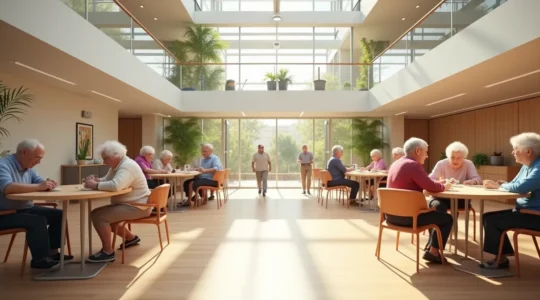
Beyond Bingo: How to Find a Senior Center That Fuels Your Purpose
Contrary to the outdated ‘bingo hall’ image, today’s best senior centers are vibrant hubs for professional growth and personal legacy. They offer university-level learning and skill-based workshops, not just passive recreation. They function as platforms for high-impact volunteering and member-led…
Read more
How to Build a “Social Portfolio” That Protects Against Cellular Aging?
Strategic social connection is not a hobby; it’s a potent biological intervention that directly modulates the mechanisms of aging. Building a “Social Portfolio”—a mix of deep, weak, and purpose-driven ties—triggers a specific neurochemical cocktail that strengthens immune function. Social isolation…
Read more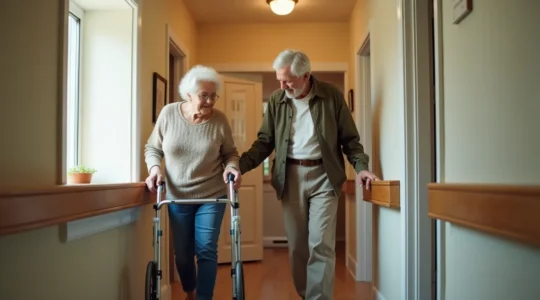
How to Fall-Proof a Multi-Level Home for Aging Parents?
In summary: Treat your home as a system with potential failure points; indoor falls are the primary cause of serious injury like hip fractures. Systematically address high-risk zones: clear pathways, secure all rugs or remove them, and automate lighting for…
Read more
How to Restore Hand Dexterity After 70 for Confident, Independent Living
In summary: Loss of hand dexterity is not inevitable; it can be significantly improved with a targeted, functional approach. Grip strength is a critical indicator of overall health and long-term independence, making it a priority. Effective training uses simple household…
Read more
How to Create a Safe Aging-in-Place Plan for Seniors Living Alone?
In summary: Shift from a reactive safety checklist to building a proactive “Ecosystem of Independence” that preserves autonomy. Structure daily routines and leverage technology to reduce caregiver dependency and empower self-management. Use a hybrid approach, starting with in-home care to…
Read more