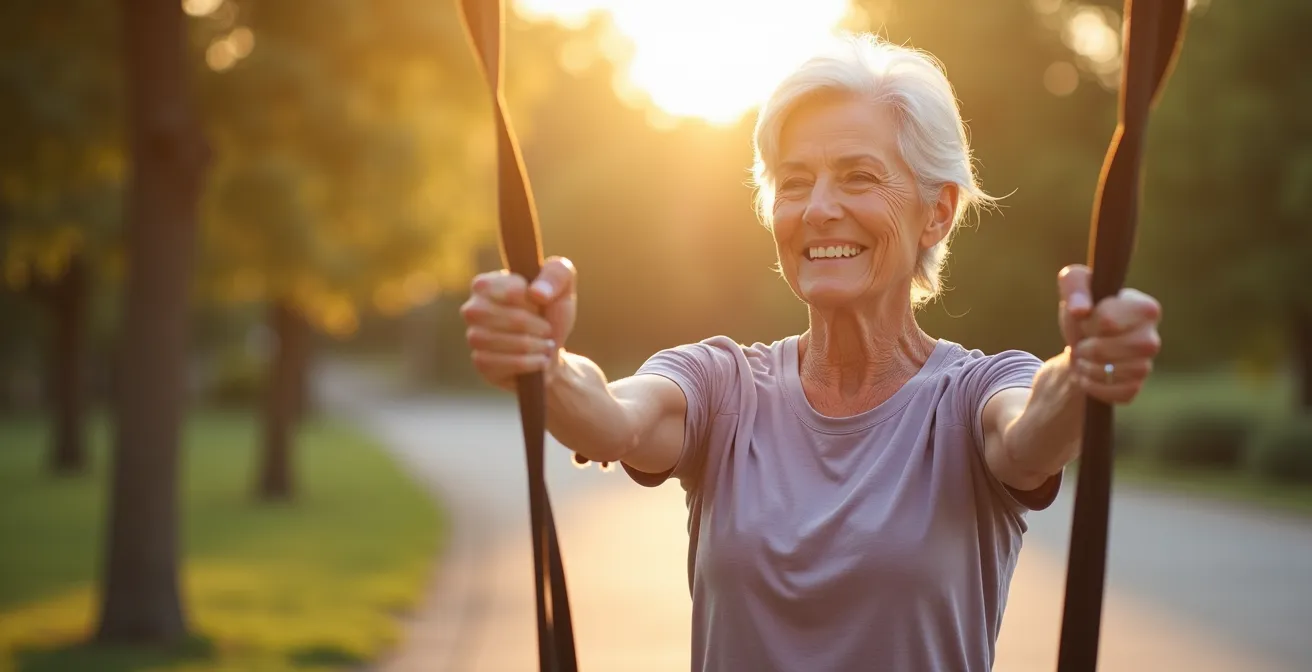
Rebuilding bone density after 60 doesn’t require high-risk, high-impact exercise; it demands a smarter, holistic system that prioritizes safety and metabolic support.
- Effective bone strengthening comes from “intelligent loading” through safe, progressive resistance exercises, not jarring impact.
- True progress requires metabolic optimization: ensuring you absorb the right nutrients (like calcium citrate and adequate protein) and mitigating factors that block absorption.
Recommendation: Focus on building a complete “resilience ecosystem” that combines safe exercise, optimized nutrition, and proactive fall prevention to build strength from the inside out.
The diagnosis of osteopenia or the fear of osteoporosis can feel like a mandate to slow down. For many over 60, the advice to perform “weight-bearing exercise” conjures images of punishing, high-impact cardio that seems more likely to cause a fracture than prevent one. Conventional wisdom often stops at “take more calcium” and “go for a walk,” leaving many feeling powerless against the steady decline of bone density. This approach overlooks a critical truth: your bones are a dynamic, living system that responds to the right signals.
But what if the key to rebuilding bone wasn’t about more impact, but smarter, more strategic inputs? What if you could send powerful bone-building signals without the high-risk jarring? The reality is that a truly effective strategy goes far beyond generic advice. It involves a cohesive system of intelligent, low-impact loading, precise nutritional support to optimize your metabolism for bone health, and a conscious effort to build a personal “resilience ecosystem” that protects you from the single greatest threat: falls.
This article moves past the platitudes to provide a clear, cautious, and empowering roadmap. We will explore how to perform exercises safely, how to ensure your body can actually use the nutrients you consume, and how to turn your home into a fortress of safety. It’s time to stop fearing fragility and start building resilience.
To navigate this comprehensive guide, we have broken down the core components of building bone resilience into clear, actionable sections. The following summary outlines the journey from understanding the risks to mastering the solutions.
Summary: A Low-Impact Strategy for Rebuilding Bone Density
- Why a Hip Fracture Reduces Life Expectancy by 20% in the First Year?
- How to Perform Weight-Bearing Exercises safely with Osteopenia?
- The Risk of Long-Term Proton Pump Inhibitors on Calcium Absorption
- Calcium Citrate vs Carbonate: Which Is Absorbed Better by Seniors?
- When to Request a DEXA Scan: Guidelines for Men and Women Over 65
- How to Incorporate 30g of Protein per Meal for Muscle Retention?
- Why 90% of Hip Fractures Are Caused by Indoor Falls?
- How to Improve Standing Balance to prevent Falls on Uneven Terrain?
Why a Hip Fracture Reduces Life Expectancy by 20% in the First Year?
A hip fracture is far more than a broken bone; it is a life-altering event that can trigger a cascade of health complications, dramatically impacting both quality of life and longevity. The stark statistics paint a sobering picture of the severity. The initial trauma and surgery are just the beginning. The subsequent period of immobility is a major catalyst for decline, leading to muscle atrophy (sarcopenia), an increased risk of blood clots, pneumonia, and pressure sores. This forced sedentary state places immense strain on the cardiovascular system, especially in individuals with pre-existing conditions.
The psychological toll is equally devastating. The loss of independence, chronic pain, and fear of falling again can lead to depression and social isolation, which are themselves linked to poorer health outcomes. A landmark study on post-fracture mortality highlights the gravity of the situation. It found that in the six months following a hip fracture, participants were 5.9 times more likely to die than their peers without a fracture. For those with underlying heart disease, the mortality rate was a staggering 30.2%. This demonstrates that a fracture doesn’t just damage a bone; it destabilizes the entire health ecosystem of an older adult.
Understanding these severe consequences is not about fear, but about motivation. It reframes bone health from a passive concern to an active, urgent priority. Preventing that first fracture is one of the most powerful levers you have to protect your long-term health and independence. Every step taken to improve bone density and prevent falls is a direct investment in a longer, healthier life.
How to Perform Weight-Bearing Exercises Safely with Osteopenia?
The term “weight-bearing” can be intimidating, but it doesn’t have to mean high-impact. The goal is what experts call “intelligent loading”: applying safe, progressive stress to your skeleton to signal your bones to grow stronger. With osteopenia, safety is paramount. The key is to start gently and build up, allowing your body to adapt without exposing it to sudden, risky forces. High-impact activities like running on pavement or jumping from heights should be avoided. Instead, focus on low-impact weight-bearing exercises like brisk walking, using an elliptical machine, or low-impact aerobics.
The most effective strategy, however, is progressive muscle resistance training. This involves using your own body weight, resistance bands, or light weights to challenge your muscles. As your muscles pull on your bones during these exercises, they create the productive tension needed for bone growth. As The Royal Osteoporosis Society states, this is the gold standard for bone-building exercise.
Progressive muscle resistance training is the best type of muscle-strengthening exercise for your bones. It involves using weights or resistance bands to build up the work for your muscles to do over time.
– The Royal Osteoporosis Society, Exercise for Bone Health Guidelines
To begin safely, always consult a physical therapist or a qualified trainer experienced with osteoporosis. They can help you master proper form to prevent injury. A safe progression might look like this:
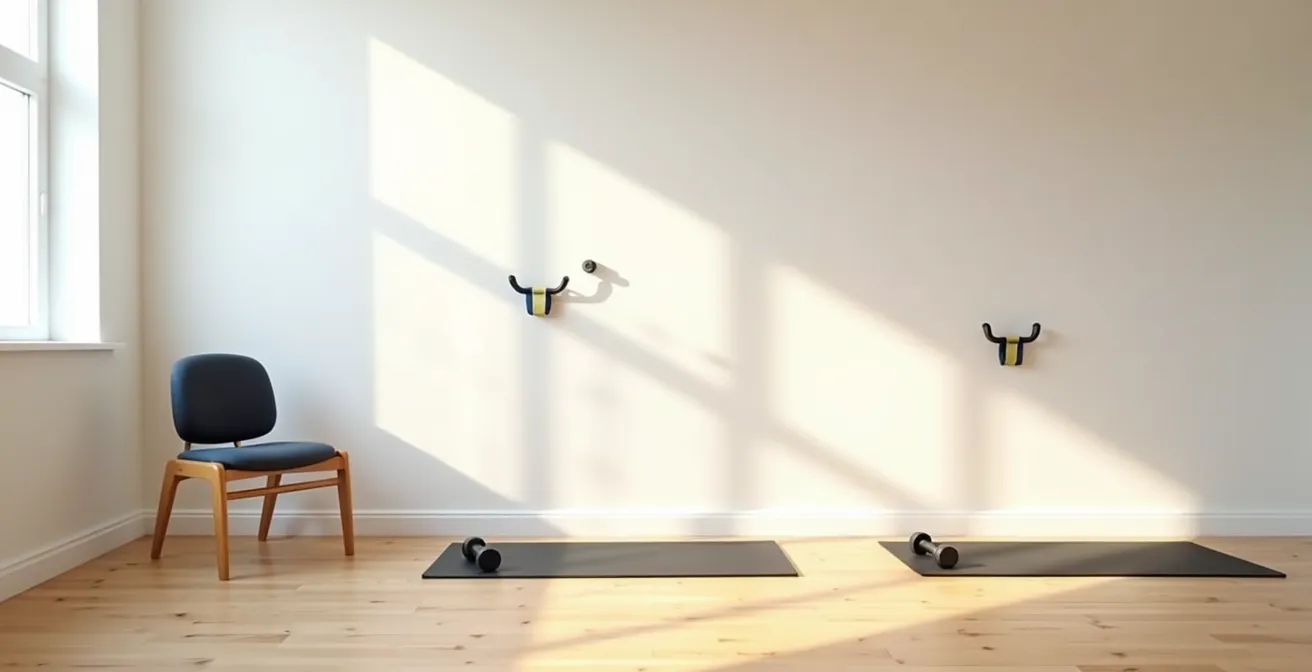
As the visual guide suggests, you can start with simple movements like chair squats (using a chair for support), then progress to using resistance bands, and finally introduce light dumbbells as your strength increases. The rule of thumb is to perform 8-12 repetitions of an exercise, stopping when your muscles feel tired but not exhausted, ensuring your technique remains perfect. Remember to stand up for a few minutes every hour to break up prolonged sitting, as this simple act contributes to your daily bone-loading activities.
The Risk of Long-Term Proton Pump Inhibitors on Calcium Absorption
While we focus on adding good things to our routine, it’s equally important to identify factors that may be quietly sabotaging our efforts. One of the most significant and often overlooked culprits is the long-term use of Proton Pump Inhibitors (PPIs). These common medications, used to treat acid reflux and GERD (e.g., omeprazole, lansoprazole), work by drastically reducing stomach acid. While effective for gastric issues, this creates a major problem for bone health.
Your body needs a highly acidic environment to break down and absorb certain nutrients, most notably calcium. The most common and inexpensive form of calcium supplement, calcium carbonate, is highly dependent on stomach acid for absorption. When PPIs neutralize this acid, the calcium carbonate passes through your system largely unabsorbed. This means that even if you are diligently taking your supplements, your bones may not be receiving the essential building blocks they need. This creates a dangerous false sense of security.
It’s a critical piece of the “metabolic optimization” puzzle. If you are on long-term PPI therapy, it is vital to discuss this with your doctor. Never stop a prescribed medication without medical advice, but you can have an informed conversation about a mitigation strategy. This involves not only adjusting your supplement type but also optimizing your entire nutritional approach to ensure maximum benefit.
Your Action Plan: Calcium Optimization for PPI Users
- Switch from calcium carbonate to calcium citrate supplements, which do not require stomach acid for absorption.
- Take calcium citrate with or without food for consistent absorption.
- Split your calcium doses into 500mg or less throughout the day for better uptake.
- Ensure adequate Vitamin D3 intake (typically 800-1000 IU daily) to facilitate calcium absorption in the intestine.
- Discuss with your doctor the possibility of stepping down to a less potent acid reducer, like an H2 blocker, if appropriate for your condition.
Calcium Citrate vs Carbonate: Which Is Absorbed Better by Seniors?
Choosing a calcium supplement isn’t as simple as grabbing the first bottle off the shelf. As we’ve seen, factors like stomach acid levels can dramatically affect how much of the mineral your body actually absorbs. For seniors, and especially for those on PPIs, the choice between the two most common forms—calcium carbonate and calcium citrate—is critical. Understanding the difference is key to ensuring your investment in supplements translates into stronger bones.
Calcium carbonate is the most common form. It’s inexpensive and contains a higher percentage of elemental calcium per pill (40%), meaning you need fewer pills to reach your daily goal. However, its major drawback is its dependence on stomach acid for absorption. It must be taken with food to stimulate acid production, and its effectiveness is significantly reduced in individuals with low stomach acid (a common condition in older adults) or those taking acid-reducing medication.
Calcium citrate, on the other hand, is the star player for senior bone health. While it contains less elemental calcium per pill (21%) and is generally more expensive, its key advantage is that it does not require stomach acid for absorption. It can be taken anytime, with or without food, making it a more reliable and convenient option for seniors. It is also less likely to cause constipation, a common side effect of calcium carbonate. As this comparative analysis from the NIAMS shows, the choice depends heavily on individual health factors.
| Factor | Calcium Citrate | Calcium Carbonate |
|---|---|---|
| Absorption | Better absorbed without stomach acid | Requires stomach acid for absorption |
| Best for PPI users | Yes – recommended | No – poor absorption |
| Elemental calcium | 21% (lower) | 40% (higher) |
| Cost | More expensive | Less expensive |
| Dosing | Can take anytime | Must take with meals |
| Pill burden | More pills needed | Fewer pills needed |
| Side effects | Less constipation | More constipation risk |
When to Request a DEXA Scan: Guidelines for Men and Women Over 65
You can’t manage what you don’t measure. While exercise and nutrition are the tools for change, the DEXA (Dual-Energy X-ray Absorptiometry) scan is the diagnostic dashboard that tells you where you stand. This simple, painless scan is the gold standard for measuring bone mineral density (BMD). It provides a crucial “T-score” that compares your bone density to that of a healthy young adult, allowing your doctor to diagnose osteopenia (low bone mass) or osteoporosis.
Knowing your T-score is empowering. It removes the guesswork and allows you and your doctor to create a targeted, personalized plan. It provides a baseline from which you can track the effectiveness of your lifestyle interventions over time. General guidelines recommend screening for all women aged 65 and older and men aged 70 and older. However, if you have significant risk factors—such as a previous fracture, a family history of osteoporosis, or long-term use of steroid medications—your doctor may recommend an earlier scan.
A DEXA scan is not a one-time event. If your results show osteopenia or osteoporosis, follow-up scans are typically recommended every one to two years to monitor changes and adjust your treatment plan accordingly. Seeing a T-score improve can be incredibly motivating, providing tangible proof that your efforts are paying off. This is precisely what happened in one well-documented case.
Case Study: Reversing Osteoporosis with Targeted Exercise
Bea, a patient diagnosed with osteoporosis based on her DEXA scan T-score, sought an alternative to medication. She committed to Margaret Martin’s “Exercise for Better Bones” program, a structured regimen of safe, targeted exercises. Her follow-up DEXA scan revealed a remarkable outcome: she had built enough bone density to move out of the osteoporosis range entirely. As detailed in the program’s success stories, Bea’s journey demonstrates the measurable and powerful impact that a dedicated, intelligent loading program can have on bone health, turning a diagnosis into a story of recovery.
How to Incorporate 30g of Protein per Meal for Muscle Retention?
Strong bones need a strong support system. That system is your muscles. Muscle mass naturally declines with age in a process called sarcopenia, which not only makes you weaker but also removes the protective “padding” around your bones, increasing fracture risk during a fall. One of the most effective strategies to combat sarcopenia is to ensure adequate protein intake, spread evenly throughout the day. For seniors, a target of 25-30 grams of protein per meal is often recommended to maximally stimulate muscle protein synthesis.
Hitting this target can seem daunting, especially if you’re used to smaller meals. The key is to be strategic and make protein the star of every plate. This doesn’t mean eating huge steaks three times a day. It’s about smart combinations and protein-boosting additions. Think of protein as the essential scaffolding that your muscles—and by extension, your bones—rely on to stay strong and resilient.
Here are some practical, easy-to-implement strategies to help you reach that 30g goal at each meal:
- Boost Your Breakfast: A three-egg omelet provides about 18g of protein. Pair it with a side of Greek yogurt (10g) to get close to your target right from the start of the day.
- Use Visual Guides: A portion of meat or fish about the size of the palm of your hand typically contains 20-30g of protein.
- Add ‘Invisible’ Protein: Stir a scoop of unflavored collagen or whey protein isolate powder into oatmeal, soups, sauces, or even your morning coffee for an easy 10-20g boost.
- Embrace the “Protein First” Rule: Make a conscious effort to eat the protein portion of your meal first. This ensures you consume it before you feel full from carbohydrates or vegetables.
- Prep for Success: Keep ready-to-eat, high-protein options on hand. Hard-boiled eggs, containers of cottage cheese, pre-cooked chicken strips, or quality protein bars can be lifesavers.
Why 90% of Hip Fractures Are Caused by Indoor Falls?
While we build internal resilience through diet and exercise, we must address the most immediate catalyst for fracture: the fall itself. It’s a common misconception that the most dangerous places are icy sidewalks or uneven park trails. The startling reality is that for seniors, the greatest danger lies within the perceived safety of their own homes. An estimated 90% of all hip fractures are the direct result of a simple indoor fall.
Homes are filled with “booby traps” that we stop noticing over time. A loose corner on a throw rug, a poorly lit hallway on the way to the bathroom at night, an electrical cord stretched across a walkway, or a slippery bathmat can all become the trigger for a devastating fall. For someone with compromised bone density, even a seemingly minor trip from a standing height can be enough to cause a hip fracture. This shifts the focus of prevention from the outside world to our immediate living space.
Creating a safe home environment is not about living in a sterile, empty box. It’s about making conscious, simple modifications to eliminate the most common hazards. Conducting a room-by-room safety audit is one of the most proactive and empowering steps you can take to build your “resilience ecosystem.” This practical approach dramatically reduces your risk of the event that turns bone fragility into a medical crisis.
- Bathroom: Install grab bars in the shower and next to the toilet. Use non-slip mats inside and outside the tub. A raised toilet seat can make sitting and standing much safer.
- Bedroom & Hallways: Ensure a clear, wide path from the bed to the door. Remove all loose throw rugs. Install motion-activated night lights to illuminate pathways for nighttime trips.
- Stairs: Ensure sturdy handrails are installed on both sides. Apply high-contrast tape to the edge of each step to make them more visible. Check that lighting is bright.
- Living Areas: Secure all electrical and phone cords along walls, out of walkways. Remove low-lying furniture like coffee tables or footstools from main traffic paths.
- Kitchen: Clean up any spills immediately. Rearrange cupboards so frequently used items are stored at waist level, avoiding the need for stretching or step stools.
Key Takeaways
- Building bone density is a holistic process that combines safe exercise (“intelligent loading”), optimized nutrition, and proactive fall prevention.
- Effective exercise for osteopenia prioritizes progressive resistance training over high-impact cardio, focusing on safety and proper form.
- True “metabolic optimization” involves choosing the right supplements (like calcium citrate) and managing factors like PPI use that can hinder nutrient absorption.
How to Improve Standing Balance to Prevent Falls on Uneven Terrain?
A safe home environment is your first line of defense, but strong, stable balance is the personal skill that protects you everywhere else. Good balance allows your body to react instantly and effectively to unexpected challenges, whether it’s a crack in the pavement, a thick rug, or simply turning too quickly. It is a trainable skill, and consistent practice can significantly reduce your risk of falling. The goal is to challenge your body’s stabilization system in a safe, controlled manner, gradually preparing it for real-world instability.
Balance training doesn’t require a gym or fancy equipment. It can be done in the safety of your own home, using a sturdy chair or wall for support. The principle is one of progressive difficulty: start with a stable base and gradually make the exercise more challenging as you feel more confident. This slowly retrains the intricate network of nerves and muscles responsible for keeping you upright. Even simple, targeted movements can have a profound impact, such as the “foot stomping” exercise recommended by the Cleveland Clinic, which involves stomping each foot four times, twice a day, with enough force to crush a can, to send bone-loading signals to the hips.
A structured, week-by-week program can provide a clear path to better stability. Always prioritize safety by standing near a support surface. Here is a sample 12-week progression:
- Weeks 1-2: Practice the tandem stance (heel of one foot touching the toe of the other). Hold for 30 seconds, using a wall for support.
- Weeks 3-4: Progress to single-leg stands. Aim to hold for 10-15 seconds on each leg.
- Weeks 5-6: Increase the challenge by closing your eyes for 10 seconds during the tandem stance.
- Weeks 7-8: Stand with both feet on an unstable surface, like a pillow or foam pad, for 30 seconds.
- Weeks 9-10: Practice dynamic weight shifts by slowly moving your weight forward and backward, then side to side, while standing.
- Weeks 11-12: Walk heel-to-toe along a straight line on the floor. Once mastered, try it on a folded towel to simulate uneven ground.
Your journey to stronger bones is an achievable goal built on these interconnected strategies. Begin today by taking one small, proactive step—whether it’s trying a single balance exercise or scheduling a conversation with your doctor about your bone health plan. Your future independence is worth it.
Frequently Asked Questions on Rebuilding Bone Density
When should women over 65 get a DEXA scan?
All women 65 and older should have a baseline DEXA scan, then follow-up scans every 2 years if osteopenia is detected, or annually if osteoporosis is diagnosed.
What about men – when should they get tested?
Men 70 and older should get a baseline DEXA scan, or earlier if they have risk factors like previous fractures, long-term steroid use, or low testosterone.
What do T-score results mean?
A T-score of -1.0 or above is normal bone density, -1.0 to -2.5 indicates osteopenia (low bone mass), and -2.5 or below indicates osteoporosis.