
The dread of winter for those with arthritis is real, but relying on more medication isn’t the only answer. True relief comes from building a proactive daily rhythm that anticipates and defuses pain triggers. This guide moves beyond simple tips, offering a structured system of micro-adjustments—from food tracking to targeted movement and smarter tools—to help you regain control and preserve joint health through the cold months.
As a rheumatology nurse, I see the change in my patients as soon as the first cold snap arrives. It’s a familiar pattern: the morning stiffness lasts longer, the familiar ache in the knees or hands deepens, and the thought of going outside becomes daunting. The common advice you hear—”stay warm,” “keep moving,” “eat right”—is well-intentioned, but it often feels like a scattered checklist, not a cohesive plan. It leaves you reacting to pain rather than getting ahead of it.
Many people understandably reach for more pain medication, but this can create a cycle of dependency and comes with risks, especially for systems that are already working hard. But what if the key to a more comfortable winter wasn’t found only in the pillbox? What if it was about building a personal and proactive Pain Anticipation System? This approach is about understanding your body’s unique responses and using a combination of targeted, non-pharmacological strategies to manage symptoms before they spiral.
This guide is designed to give you that control back. We will move beyond the platitudes and build a practical, daily framework. We will explore how to identify your specific food triggers, master the art of heat and cold therapy, understand the crucial difference between rest and harmful inactivity, and reframe mobility aids not as a sign of weakness, but as a tool for freedom. This is your plan for a better winter.
To help you navigate these strategies, this article breaks down the essential components of your personal pain management plan. The following sections provide detailed, actionable advice you can start implementing today.
Summary: A Proactive Plan for Winter Joint Pain
- Why Certain Foods Cause Arthritis Flare-Ups Within 24 Hours?
- How to Alternate Heat and Ice for Morning Joint Stiffness?
- Topical Gels vs Oral NSAIDs: Which Is Safer for Senior Kidneys?
- The Risk of “Resting Too Much” That Cements Joint Stiffness
- When to Consider Joint Replacement: Quality of Life Indicators
- Weighted Cutlery or Universal Cuffs: Which Helps Tremors Best?
- Derby vs Offset Handle: Which Is Better for Arthritic Hands?
- How to Transition to a Mobility Aid Without Losing Self-Esteem?
Why Certain Foods Cause Arthritis Flare-Ups Within 24 Hours?
One of the most powerful steps in managing arthritis is understanding that inflammation doesn’t always come from within; it can often start on your plate. Certain foods contain compounds that can trigger an inflammatory response in the body, leading to increased pain, swelling, and stiffness, sometimes in less than a day. Common culprits include processed sugars, saturated fats, and refined carbohydrates, which can disrupt your body’s natural balance and provoke your immune system.
The key challenge is that these triggers are highly individual. What causes a flare-up for one person might have no effect on another. This is why generic “anti-inflammatory diet” lists can be frustratingly ineffective. The goal isn’t to eliminate every potentially “bad” food, but to become a detective of your own body. By systematically tracking what you eat and how your joints feel, you can identify your personal triggers. This creates a personalized roadmap for eating that minimizes pain without sacrificing all your favorite foods.
Adopting this investigative approach puts you in control. It transforms your diet from a source of anxiety into a tool for well-being. The following checklist provides a structured method for starting this process, helping you connect the dots between your meals and your symptoms.
Your Action Plan: The Food-Pain Diary Method
- Record every meal and snack with exact portions and ingredients for at least four weeks. Be specific.
- Rate your joint pain severity on a 1-10 scale every six hours, noting which joints are affected.
- Note any new or worsening symptoms within 24 hours of eating, including their exact timing.
- After a few weeks, look for patterns. Does your pain consistently increase by 2 or more points after eating a specific food or ingredient?
- Systematically eliminate one suspected trigger food for two weeks. Then, reintroduce it and monitor your symptoms closely to confirm the link.
How to Alternate Heat and Ice for Morning Joint Stiffness?
Waking up with joints that feel cemented in place is a classic hallmark of arthritis in winter, often called the “morning gel phenomenon.” The instinct might be to just wait it out, but a proactive approach using heat and cold therapy can dramatically improve your morning. The key is knowing which to use and when. Think of it this way: heat is for loosening, and cold is for calming.
Before you start your day or any activity, applying heat is your best strategy. A warm shower, a heating pad, or soaking your hands in warm water for 15-20 minutes works wonders. Heat increases blood flow, warms up the synovial fluid that lubricates your joints, and improves the elasticity of surrounding tissues. This “prepares” the joint for movement, making it less painful and reducing the risk of strain. Applying ice before movement is generally not recommended as it can make tissues tighter.
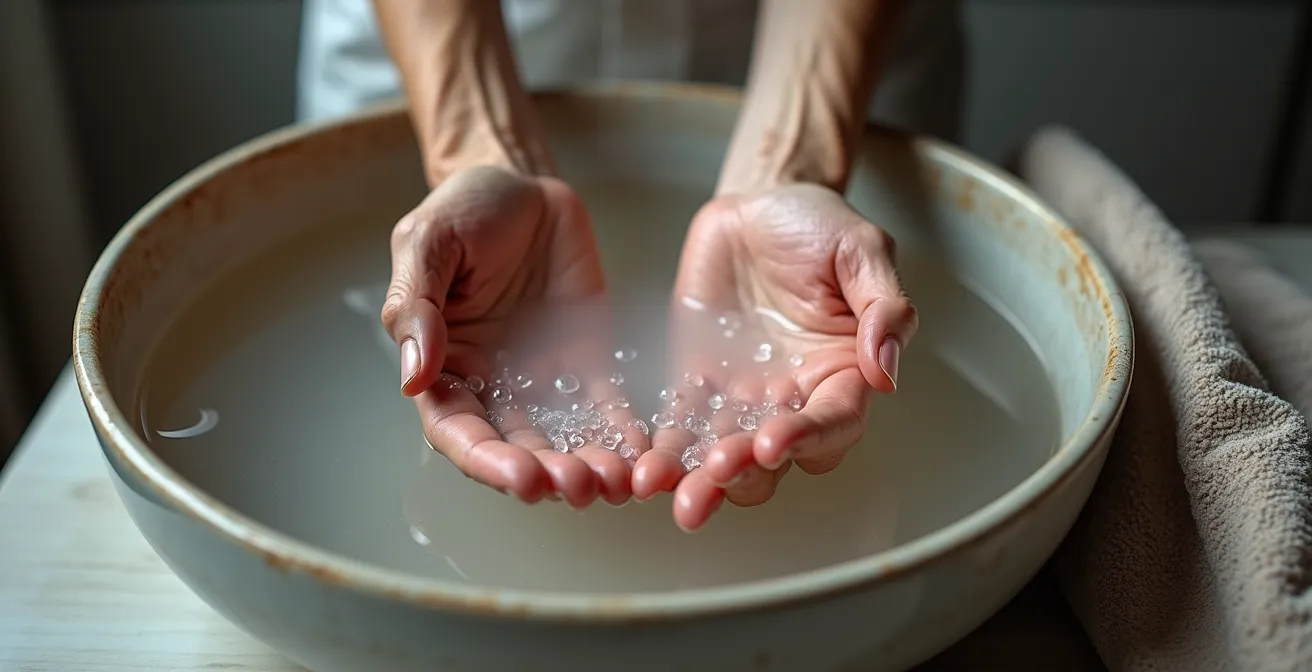
Conversely, after activity or at the end of the day when joints may feel swollen or sore, ice is your ally. A cold pack applied for 10-15 minutes helps constrict blood vessels, reducing inflammation and any micro-swelling caused by movement. This calms the joint down and can prevent next-day soreness. The following table breaks down this simple yet powerful system.
| Timing | Heat Therapy | Ice Therapy | Physiological Effect |
|---|---|---|---|
| Before Movement | ✓ Recommended (15-20 min) | Not recommended | Increases tissue elasticity for safer movement. |
| After Activity | Optional | ✓ Recommended (10-15 min) | Reduces inflammation and micro-swelling. |
| Morning Stiffness | ✓ Primary choice | Use in contrast protocol | Improves circulation and reduces gelling. |
Topical Gels vs Oral NSAIDs: Which Is Safer for Senior Kidneys?
When arthritis pain flares up, reaching for a nonsteroidal anti-inflammatory drug (NSAID) like ibuprofen or naproxen is a common reflex. While effective, oral NSAIDs are absorbed systemically, meaning they travel throughout your entire bloodstream. This can put a significant strain on vital organs, particularly the kidneys, which are responsible for filtering these medications. For seniors, especially those with pre-existing conditions like diabetes or high blood pressure, this risk is magnified.
This is where topical NSAIDs, such as diclofenac gel, offer a much safer alternative for localized pain. Instead of being ingested, these gels are applied directly to the skin over the painful joint. The medication is absorbed locally into the tissues where it’s needed, with only a tiny fraction entering the bloodstream. Clinical comparisons show that topical diclofenac gel provides 17 times lower systemic exposure than oral tablets, with a peak plasma concentration that is 158 times lower. This dramatically reduces the burden on your kidneys and other organs.
The evidence supporting this approach is strong. In fact, a 2021 study of over 12,000 older adults found a 22% lower risk of acute kidney injury with topical NSAIDs compared to their oral counterparts. Choosing a topical gel for a painful knee, hand, or shoulder is a smart, targeted strategy. It delivers relief right where it hurts while protecting your overall health, making it an essential part of a long-term, non-escalating pain management plan.
The Risk of “Resting Too Much” That Cements Joint Stiffness
When your joints are aching, the most natural instinct is to rest. While rest is important for managing acute flare-ups, chronic inactivity is one of the biggest mistakes you can make for arthritic joints, especially in winter. Joints are designed for movement. This movement stimulates the production of synovial fluid, a viscous substance that acts like oil in an engine, lubricating the cartilage and allowing for smooth motion. When you stay still for too long, this fluid can thicken, creating what clinicians call a “gelling effect.” This is what cements that feeling of stiffness.
As one orthopedic surgeon aptly puts it, you must remember that “motion is lotion.” Even minimal, gentle movement is crucial for lubricating the joints and preventing this gelling. The goal is not to run a marathon but to break up long periods of sitting. You need to build a “Movement Menu” into your day, composed of small, manageable activities that keep your joints mobile without causing strain. This is about working smarter, not harder.
Motion is lotion – even minimal, gentle movement is crucial for lubricating joints and preventing the ‘gelling’ effect of inactivity.
– Dr. Lucian Warth, Franciscan Health Center for Hip & Knee Surgery
Instead of thinking about one long “exercise session,” think in 5- to 10-minute blocks scattered throughout your day. These small investments in movement pay huge dividends in reduced stiffness and pain. Here are some ideas for your Winter Movement Menu:
- 5-minute activities: Ankle pumps and circles while watching TV, seated marching during commercial breaks, gentle neck rolls and shoulder shrugs while reading.
- 10-minute activities: A short chair yoga sequence, slow and supported walks down a hallway, or standing balance exercises while holding onto a counter.
- 15-minute activities: A full-body gentle stretching routine, simple resistance band exercises for arms and legs, or an indoor Tai Chi for arthritis program.
When to Consider Joint Replacement: Quality of Life Indicators
A proactive management plan can preserve joint function for years, but for some, there comes a point where the damage from arthritis is so severe that non-surgical methods no longer provide adequate quality of life. Making the decision to consider joint replacement surgery is deeply personal and should never be based on an X-ray alone. The most important factor is how your joint pain is fundamentally impacting your ability to live your life.
So, how do you know when it’s time to have that conversation with your surgeon? It comes down to a few key quality-of-life indicators. If your pain consistently keeps you awake at night despite medication, that’s a major red flag. Another is a significant reduction in mobility; if your walking distance has shrunk to less than one block without severe pain, it’s a sign that your independence is being severely compromised. Furthermore, if you find you need escalating amounts of pain medication just to perform basic daily activities, it suggests that surgical intervention may offer a better long-term outcome than continuing to chase the pain with pills.

The decision can be scary, but it’s also a doorway to renewed activity and freedom. Modern surgery is incredibly effective, and you can take steps to improve your outcome even before the procedure. Studies show that patients who engage in “pre-habilitation”—strengthening exercises and weight management programs before surgery—experience up to 30% faster recovery times and better overall function afterward. Thinking about surgery is not an admission of defeat; it’s a proactive step toward reclaiming the life you want to live.
Weighted Cutlery or Universal Cuffs: Which Helps Tremors Best?
Pain and stiffness aren’t the only challenges arthritis can bring to the table. For many, a weakened grip or tremors can turn the simple, enjoyable act of eating into a frustrating and difficult task. Thankfully, adaptive eating aids like weighted cutlery and universal cuffs can restore independence and dignity to mealtimes. The key is choosing the right tool for your specific symptoms, as they work in very different ways.
Weighted cutlery is most effective for individuals with tremors, such as those associated with Parkinson’s disease or essential tremor. The added weight helps to dampen the amplitude of the tremor, providing more stability and control as you bring the utensil to your mouth. However, for someone with severe arthritis and a very weak grip, the extra weight can be counterproductive, causing more hand fatigue.
This is where universal cuffs are an ideal solution. A universal cuff is a strap that fits around your palm, with a small pocket to hold a standard utensil. This brilliant design requires almost no gripping force at all. The effort of lifting is transferred from your fingers and hand to the larger, stronger muscles of your wrist and arm. It’s the perfect choice for anyone with significant grip weakness, severe finger joint pain, or weak wrists.
| Condition | Weighted Cutlery | Universal Cuffs | Key Benefit |
|---|---|---|---|
| Essential Tremor | ✓✓ Highly Effective | ✓ Moderately Helpful | Weight dampens tremor amplitude |
| Severe Arthritis Grip | ✓ Can be difficult | ✓✓ Ideal Solution | No gripping force required |
| Parkinson’s Tremor | ✓✓ Recommended | ✓ Secondary option | Stabilizes involuntary movement |
| Weak Wrist/Hand | Not recommended | ✓✓ Best Choice | Transfers effort to stronger muscles |
Derby vs Offset Handle: Which Is Better for Arthritic Hands?
When a cane becomes a necessary partner for mobility, the handle you choose can make the difference between comfortable support and added hand pain. For someone with arthritis, this choice is not about aesthetics; it’s about biomechanics. The two most common ergonomic options are the Derby handle and the Offset handle, and each offers distinct advantages depending on where your arthritis is most prominent.
The Derby handle is a classic, elegant design that provides a wide, supportive surface. Its primary benefit is its ability to distribute your weight and pressure evenly across the palm. This makes it an excellent choice for individuals who have arthritis primarily in the finger joints or the base of the thumb (metacarpal arthritis). By spreading the load, it avoids creating painful pressure points on specific, sensitive joints.
The Offset handle, on the other hand, features a distinct bend near the top that positions the user’s hand directly over the center of the cane’s shaft. This design is engineered to provide maximum stability and reduce strain on the wrist. Clinical assessments confirm its effectiveness; in patients who need to bear a significant amount of weight through the cane (over 30% of their body weight), offset handles have been shown to reduce wrist strain by as much as 40%. This makes it the superior choice for anyone with wrist arthritis or for those who rely heavily on their cane for balance and weight-bearing.
Before purchasing, it’s essential to perform an in-store pressure test. Hold each type of handle and apply downward pressure, noting any “hot spots” in your palm, fingers, or wrist. Walk a few steps with each. The right handle will feel like a natural extension of your arm, providing support without creating a new source of pain.
Key Takeaways
- Proactive management through a daily system is more effective than reacting to pain with medication.
- Personalized tracking of food, activity, and symptoms is the foundation of controlling flare-ups.
- “Motion is lotion”: Gentle, consistent movement is essential for joint lubrication and preventing stiffness.
- Adaptive aids are not a sign of weakness, but powerful tools for preserving energy and independence.
How to Transition to a Mobility Aid Without Losing Self-Esteem?
As a nurse, I often see the hesitation in a patient’s eyes when we first discuss using a cane or a walker. It’s a moment fraught with emotion. For many, accepting a mobility aid feels like a public declaration of frailty or a loss of independence. This psychological barrier is often more difficult to overcome than the physical need itself. The most important step in this transition is a profound mental shift: reframing the aid from a symbol of decline to a tool of empowerment.
A rheumatologist I work with puts it beautifully, and her words are worth remembering. She advises patients to think of their mobility aid not as a crutch, but as a key.
Think of your mobility aid not as a crutch, but as a key that unlocks freedom, extends energy reserves, and enables continued participation in cherished activities.
– Dr. Rebecca Sharim, LVH Rheumatology-Highland Avenue
This “key” allows you to go to the grocery store with less pain, walk in the park with your grandchildren for longer, and attend social events with more confidence. It preserves your precious energy for the things you love, rather than wasting it on simply staying upright. To make this transition smoother, adopt a phased rollout plan. Don’t feel you have to go from nothing to using it everywhere overnight. Start by using the aid at home only, allowing you to build confidence and muscle memory in a private space. Then, keep it in the car for longer outings, a security blanket “just in case.” Gradually expand its use to familiar short walks and, eventually, to all your activities. Personalizing your aid with colors or stylish accessories can also help make it feel like a part of you, rather than a medical device.
By building this personal system—from diet and movement to the smart use of tools—you are taking the most important step: you are placing control back in your own hands. For guidance on creating a personalized plan, the next logical step is to discuss these strategies with your healthcare provider or a physical therapist.
Frequently Asked Questions About Arthritis and Mobility
Has my walking distance decreased to less than one block without severe pain?
Significant mobility reduction that impacts your daily independence and ability to perform necessary errands is a strong indicator that you should discuss more advanced interventions, including the possibility of joint replacement, with your doctor.
Do I need increasing amounts of pain medication just to function?
When pain medication escalation becomes necessary just to manage basic daily activities like dressing or light housework, it is a sign that your current management plan is no longer sufficient. At this point, surgical intervention may offer better long-term outcomes and quality of life.