
Securing your home for life is not a single action but a continuous legal and logistical strategy; treating your property as a managed asset is the only way to guarantee your autonomy.
- Most threats to lifelong occupancy stem from reactive, crisis-driven decisions rather than proactive planning.
- A secure plan integrates financial analysis, physical modifications, social support networks, and clear legal contingencies.
Recommendation: Shift your mindset from simply ‘living’ in your home to actively ‘managing’ it as your most critical asset for independence.
The prospect of being forced to leave one’s home is a profound source of anxiety for many seniors. It is a fear often rooted in scenarios of declining health, financial strain, or unforeseen legal complications. The conventional advice—install grab bars, write a will, talk to your family—while well-intentioned, often fails to address the complex interplay of factors that can jeopardize long-term occupancy. These solutions are pieces of a puzzle, not the comprehensive strategy required.
The conversation must evolve beyond simple safety modifications. Securing your “forever home” requires the mindset of a strategist, viewing your property not merely as a dwelling but as a central asset in your portfolio of independence. This involves a proactive legal and logistical framework designed to anticipate and neutralize threats to your autonomy before they manifest as crises. The true key to aging in place is not found in reacting to emergencies, but in constructing a robust plan that renders such emergencies manageable.
This guide will deconstruct the common points of failure—financial, physical, and social—and provide a formal framework for decision-making. We will examine how to evaluate your environment, make sound financial choices between modifying and downsizing, build a support network, and establish clear criteria for when and how to adapt your living situation, all while preserving your legal rights and assets.
The following sections provide a structured approach to a complex topic. This table of contents outlines the key strategic areas you must consider to build a resilient plan for lifelong homeownership.
Summary: A Strategic Framework for Lifelong Home Security
- Why Walkability Scores Matter More After You Stop Driving?
- Downsizing vs Modifying: Which Is Financially Smarter in the Long Run?
- The Risk of Locked Doors: Installing Keyless Entry for Paramedics
- How to Create a “Village” of Neighbors for Mutual Support?
- When to Trigger “Plan B”: Setting Criteria for Leaving Home?
- When to Renovate: Proactive vs Crisis-Response Construction?
- In-Home Care vs Assisted Living: Which Choice Preserves Assets Longer?
- How to Search the Real Estate Market for “Universal Design” Features?
Why Walkability Scores Matter More After You Stop Driving?
The decision to cease driving, whether voluntary or medically necessary, represents a critical juncture in an individual’s independence. It is at this moment that the immediate environment of one’s home transforms from a matter of convenience to a primary determinant of autonomy. A high walkability score is not a lifestyle amenity; it is a legal and practical bulwark against isolation and dependency. The desire to remain at home is strong; a recent survey found that 75% of adults aged 50 and older wish to remain in their current homes as they age. However, this wish is only tenable if essential services remain accessible.
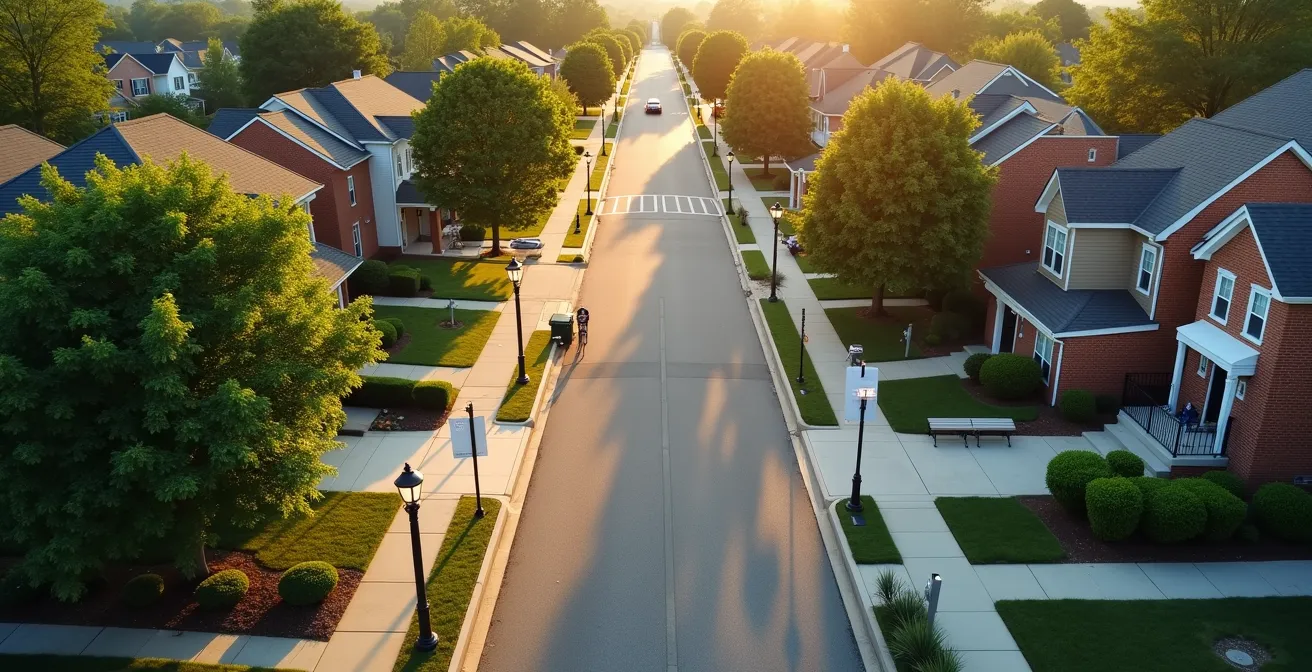
From a strategic planning perspective, a walkable neighborhood mitigates significant future costs. It reduces reliance on paid transportation services, facilitates access to preventative healthcare, and supports the social engagement crucial for mental and physical well-being. Evaluating your property’s walkability score is therefore an essential component of assessing its long-term viability as your “forever home.” This is not a passive rating but an active audit of your future access to essential resources. A property in a location that requires a vehicle for every need becomes a liability, not an asset, the moment driving is no longer an option.
Your Proactive Proximity Audit: 5 Key Verifications
- Map essential services (physician, pharmacy, grocery store) and confirm they are within a manageable 15-minute walking radius.
- Identify all public transportation stops, review their schedules for frequency, and assess the physical accessibility of the route to the stop.
- Locate community centers, libraries, and parks that facilitate social engagement and confirm they are safely accessible on foot.
- Assess the physical infrastructure, specifically looking for complete and even sidewalks, benches for resting, and clearly marked, safe crosswalks.
- Document the availability and reliability of local delivery services and ride-sharing options as a secondary support system.
Downsizing vs Modifying: Which Is Financially Smarter in the Long Run?
The decision between modifying a long-term residence and downsizing to a new one is a complex financial equation that must be approached with analytical rigor, not emotion. Downsizing is often presented as the default “smart” choice, but this overlooks significant transaction costs and the potential loss of an appreciating asset. A comprehensive analysis requires what is known as lifecycle costing—evaluating all expenses over a projected timeframe, not just the initial outlay.
Modifying the current home, while incurring upfront renovation costs, preserves the existing asset, avoids capital gains taxes, and maintains established social networks. Furthermore, modifications can be strategic. The addition of an Accessory Dwelling Unit (ADU), for instance, can transform a cost center into an income-generating asset, providing a revenue stream to offset future care costs. Conversely, downsizing triggers immediate transaction fees, which can be substantial, and moves you into a new property where you must establish new support systems. The “break-even” point for such a move can often be many years, if it is ever reached at all.
The following table provides a framework for comparing the long-term financial implications of each path. It is imperative to conduct this analysis based on your specific circumstances and local market conditions.
| Factor | Home Modification | Downsizing |
|---|---|---|
| Upfront Costs | $3,000 – $50,000 for renovations | 6-10% of home value in transaction fees |
| Bathroom Remodel | $10,000 – $25,000 | N/A (included in new home) |
| Monthly Costs | Same mortgage/utilities | Potentially lower utilities/taxes |
| Asset Appreciation | Home continues appreciating | Capital gains realized immediately |
| Income Potential | Can add ADU for $40,000-$150,000 | No rental income opportunity |
| Break-Even Point | N/A | Typically 5-7 years |
The Risk of Locked Doors: Installing Keyless Entry for Paramedics
In an emergency medical situation, time is the most critical variable. A locked door can be a catastrophic barrier, forcing first responders to waste precious moments or cause significant property damage to gain entry. While physical security is important, it must be balanced with the need for emergency accessibility. From a legal and risk-management standpoint, implementing a secure, reliable method for emergency personnel to access your home is a non-negotiable component of any credible aging-in-place plan.

Keyless entry systems, such as smart locks or keypad-based devices, offer a sophisticated solution. They allow for the creation of a dedicated, single-use, or time-limited code specifically for Emergency Medical Services (EMS). This code can be provided to 911 dispatchers during an emergency call, ensuring immediate and non-destructive entry. This proactive measure not only facilitates faster medical intervention but also provides peace of mind for both the senior resident and their family. It is a small investment that protects against a high-stakes, worst-case scenario. Choosing the right technology depends on individual comfort with technology and physical dexterity.
| Technology | Pros | Cons | Best For |
|---|---|---|---|
| Keypad Locks | No app needed, multiple codes, battery backup | Buttons can be hard to see/press | Those with good dexterity |
| Smart Locks (App-based) | Remote access, temporary codes, activity logs | Requires smartphone, Wi-Fi dependent | Tech-savvy seniors with family support |
| Biometric Locks | No codes to remember, quick access | May not work with dry/aged skin | Seniors with mild cognitive issues |
| Physical Lockbox | No batteries, simple to use, affordable | Less secure, keys can be lost | Backup emergency option |
How to Create a “Village” of Neighbors for Mutual Support?
While legal and financial structures are the bedrock of a secure aging-in-place plan, the social infrastructure is what makes it resilient. A formalized network of trusted neighbors—a modern “village”—can provide an invaluable layer of support, mitigating risks from social isolation to minor emergencies. This is not a casual arrangement but a deliberately constructed system of mutual aid. It transforms a collection of individual households into a cohesive support unit, enhancing safety and well-being for all members.
The “Village Movement” is a well-documented model demonstrating the efficacy of this approach. These organizations formalize neighborly support, creating a structure for coordinating services and sharing resources. This is a strategic asset that should be cultivated proactively.
Case Study: The Village Movement Model
For over two decades, initiatives like those funded by the Archstone Foundation in California have proven the success of the “village” concept. These networks empower seniors to maintain independence by organizing volunteer drivers, coordinating group shopping trips, and implementing regular check-in systems. This model reduces isolation and keeps costs minimal by leveraging the most valuable resource in any community: trusted neighbors.
Building such a network requires initiative and structure. It begins with identifying a core group of willing participants and establishing clear, simple communication channels. The goal is to build a system of low-friction, high-trust interactions that can be scaled up in times of need. A simple shared contact list, an agreement to check in on one another during extreme weather, or a group text for urgent needs can form the foundation of a powerful support system. This social capital is as important to your long-term security as the equity in your home.
When to Trigger “Plan B”: Setting Criteria for Leaving Home?
A robust legal and financial plan is not complete without clear, pre-defined contingency protocols. The most difficult contingency to plan for is the one where aging in place is no longer viable or safe. Emotionally charged and often made under duress, the decision to leave one’s home can be financially and psychologically devastating if not planned for. The antidote to a crisis-driven decision is to establish objective, written “trigger criteria” for activating a “Plan B.”
These triggers are not a sign of failure; they are the ultimate expression of proactive control. They are specific, observable events or conditions that, by prior agreement with family and legal counsel, initiate a pre-determined course of action. This might include increasing in-home care, a trial stay in an assisted living facility, or a permanent move. By defining these triggers when you are healthy and clear-minded, you protect your future self from making a critical decision under compromised circumstances. This act transfers the decision from the emotional chaos of a crisis to the logical execution of a pre-agreed plan.
This framework should be documented, ideally within your broader estate planning documents, and reviewed annually. It provides clarity for your family and designated agents, giving them a clear mandate to act in your best interests, guided by your own well-considered instructions.
| Stage | Triggers | Actions | Timeline |
|---|---|---|---|
| Plan B-1 | First fall, difficulty with 2+ ADLs, caregiver stress | Increase in-home care to 20+ hours/week | Immediate |
| Plan B-2 | Multiple falls, medication errors, wandering episodes | Trial respite stay in assisted living (2-4 weeks) | Within 1 month |
| Plan B-3 | Unable to manage medications, 24/7 care needed, safety concerns | Permanent move to assisted living | Within 3 months |
| Emergency | Hospitalization, sudden cognitive decline, home unsafe | Direct admission from hospital to care facility | Immediate |
When to Renovate: Proactive vs Crisis-Response Construction?
Home modifications are a cornerstone of aging in place, but their timing is as critical as their nature. There are two fundamental approaches: proactive renovation and crisis-response construction. The latter, undertaken after a fall or a medical event, is invariably more expensive, stressful, and limited in scope. Proactive renovation, planned and executed years in advance, is a strategic investment in future autonomy and financial stability.
Consider the financial disparity: a simple grab bar installation can prevent a fall. That fall, however, could lead to hospitalization and a sudden need for a complete bathroom remodel under emergency conditions, with inflated costs and limited contractor choice. A proactive approach allows for renovations to be phased in over time, aligned with financial capacity and evolving needs. Major structural changes can be completed pre-retirement when income is typically highest, while smaller aids and technology can be integrated as needed.
Case Study: The Decade Before Retirement Strategy
Financial planners and Certified Aging-in-Place Specialists (CAPS) often advise a proactive assessment around age 55. As outlined in expert analysis, this allows a family to phase renovations strategically. A $200 grab bar installed proactively can prevent a fall that leads to a catastrophic $50,000 nursing home bill. By planning a decade or more in advance, major projects are funded during peak earning years, preserving retirement assets for care and living expenses later.
This strategy transforms home modification from a reactive expense into a calculated investment in your long-term care plan. It minimizes the likelihood of a single event forcing a premature and costly departure from your home. Undertaking an assessment with a CAPS professional is the first step in developing this long-term renovation roadmap, ensuring your home adapts to you, not the other way around.
In-Home Care vs Assisted Living: Which Choice Preserves Assets Longer?
As care needs increase, a pivotal financial decision emerges: funding in-home care versus liquidating assets to move to an assisted living community. The choice has profound implications for asset preservation and the legacy you leave. While assisted living offers a comprehensive solution, it comes at a significant and escalating cost. Data shows $5,900 per month is the 2024 national average for assisted living, a figure that can quickly deplete a lifetime of savings.
In-home care, by contrast, allows for a more flexible and often more cost-effective approach. Care hours can be scaled to match specific needs, from a few hours a week for household help to 24/7 skilled nursing. This modular approach allows you to pay only for the services you require. Crucially, it allows you to retain ownership of your primary asset: your home. This property can continue to appreciate in value and can even be used as a financial tool (e.g., through a reverse mortgage or home equity line of credit) to fund care costs without requiring a full liquidation of the asset.
The break-even point is a key calculation. You must determine the monthly cost of the in-home care you need and compare it to the monthly cost of an assisted living facility. In many cases, particularly for individuals who do not require constant supervision, in-home care is the more financially prudent option for a significant period. This strategy of leveraging your home equity to fund care allows for greater control over your assets and preserves your ability to age in a familiar environment, thereby protecting both your financial and emotional well-being.
Key Takeaways
- Proactive Planning: The most effective way to secure lifelong occupancy is through a structured, forward-looking plan, not by reacting to crises.
- Strategic Asset Management: Your home should be viewed and managed as a critical financial asset that supports your independence, not just as a place to live.
- Layered Security: True security combines legal protections, financial foresight, physical modifications, and a robust social support network.
How to Search the Real Estate Market for “Universal Design” Features?
For those considering a move as part of their long-term plan, the goal must be to find a property that will not require extensive and costly modifications later. The key is to search for homes built with “Universal Design” principles. Universal Design is the concept of creating environments that are accessible to all people, regardless of age or ability. Finding these features proactively is the final piece of a comprehensive strategy for securing long-term housing.
However, the real estate market is not always cataloged with these terms in mind. A shocking analysis reveals that fewer than 4% of U.S. homes are equipped with the three most critical accessibility features: a no-step entry, single-floor living, and wheelchair-accessible doorways and hallways. This scarcity makes it imperative for a prospective buyer to be an educated and strategic searcher. You cannot rely on standard real estate listings to highlight these elements; you must actively hunt for them using specific keywords and criteria.
This requires a shift in how you view property listings. Instead of focusing on aesthetics, your primary filter must be functionality and future-proofing. Look for floor plans, inquire about doorway widths, and scrutinize photos for signs of single-level living. Using a targeted search vocabulary is essential to filter through the noise and identify the rare properties that are truly prepared to be a “forever home.”
Actionable Search Checklist: Finding Your Universal Design Home
- Utilize keyword searches for ‘main floor master’ or ‘first-floor bedroom’ to ensure single-level living is possible.
- Specifically look for listings mentioning ‘zero-step entry,’ ‘no-step entrance,’ or ‘level entry’ to avoid future ramp construction.
- Filter for property types like ‘single-story’ or ‘ranch-style’ to eliminate multi-level navigation challenges from the outset.
- Include terms like ‘curbless shower’ or ‘roll-in shower’ in your search to identify pre-modified, accessible bathrooms.
- Actively search for descriptions that include ‘wide hallways’ or ’36-inch doorways,’ which are crucial for mobility device access.
The process of securing your home for life is an ongoing exercise in diligence and foresight. The frameworks and strategies discussed provide a legal and logistical blueprint, but their power lies in their timely implementation. To wait for a crisis is to cede control over your future. The first step in this process is to conduct a thorough assessment of your current situation using the principles outlined in this guide. This proactive self-audit is the most powerful action you can take today to protect your autonomy tomorrow.