
Searching for a home with universal design isn’t about preparing for decline; it’s a strategic investment in a high-value, future-proof asset.
- Treating features like zero-step entries and wider hallways as luxury upgrades, not medical needs, unlocks significant long-term resale value.
- Proactive planning—buying or renovating before a health crisis—is dramatically more cost-effective and preserves your financial independence.
Recommendation: Shift your search from simply “finding an accessible home” to “investing in a property with built-in market appeal and lifetime comfort.”
For many retirees planning their next chapter, the thought of moving is often framed by necessity: a smaller space, a single-story layout, or features that accommodate future health needs. The common advice revolves around a clinical checklist of grab bars and ramps, a narrative of compromise rather than opportunity. This approach often leads to procrastination, as few are eager to trade their current home for one that feels like a concession to aging. From a market perspective, this is a flawed strategy that leaves financial and emotional value on the table.
The real estate market, however, tells a different story. Features once considered accommodations are now being recognized as hallmarks of luxury and smart design. The key to securing your ideal “final” home isn’t to wait for a crisis or to settle for a property that screams “senior living.” The most strategic move you can make is to reframe the entire search. It’s not about finding a place to grow old; it’s about making a savvy real estate investment that ensures comfort, independence, and financial security for decades to come.
This guide abandons the outdated checklist approach. Instead, we will explore the market intelligence needed to identify properties with intrinsic, future-proof value. We will analyze the financial implications of key decisions, understand the psychological impact of moving, and equip you with the tools to assess a home’s potential not just for your needs, but for its enduring appeal as a premium asset. It’s time to hunt for your forever home with the mindset of a sharp investor.
To navigate this crucial real estate decision, this article breaks down the essential strategies and considerations. Explore the topics below to build a comprehensive plan for finding a home that is not only perfectly suited for you but is also a wise long-term investment.
Summary: A Strategic Guide to Universal Design Real Estate
- Why Accessible Rentals Are Scarce and How to Waitlist Early?
- Ramps vs Level Entry: Which Is Better for Resale Value?
- The Risk of Relocation Stress Syndrome in Seniors Over 80
- How to Spot “Visitability” Features in a Potential New Home?
- When to Buy Your “Final” Home: Pre-Retirement vs Post-Health Event?
- Downsizing vs Modifying: Which Is Financially Smarter in the Long Run?
- When to Renovate: Proactive vs Crisis-Response Construction?
- How to Prepare for an Occupational Therapy Home Assessment?
Why Accessible Rentals Are Scarce and How to Waitlist Early?
For those considering renting, the search for an accessible home can be frustrating. The rental market is notoriously tight on inventory that includes universal design features. Most standard apartments and single-family rentals were built without considering wider doorways, zero-step entries, or reinforced bathroom walls. Landlords are often hesitant to invest in modifications for a single tenant, leading to a chronic shortage of move-in-ready accessible units. This scarcity creates intense competition and long waiting lists for the few suitable properties that do exist.
This market reality means a proactive strategy is not just advantageous; it’s essential. Waiting until a move is imminent will likely lead to disappointment or a costly compromise. The key is to get on waitlists long before you plan to move, even if the timeline is a year or more away. Start by contacting property management companies that specialize in senior or accessible housing, as well as local housing authorities that maintain lists of subsidized and market-rate accessible units. Be specific about your needs, such as a roll-in shower or a first-floor unit.
It’s also crucial to understand your rights. While landlords aren’t always required to pay for modifications, tenants with disabilities have protected rights. Under the Fair Housing Act, a housing provider must permit a tenant to make reasonable modifications to their unit at their own expense. This can include installing grab bars or a ramp. Knowing your right to make these changes can expand your options beyond the limited pool of pre-modified units, allowing you to consider a wider range of properties that can be adapted to fit your needs.
Ramps vs Level Entry: Which Is Better for Resale Value?
When evaluating a home’s entrance, the choice between a ramp and a zero-step (or level) entry seems purely functional. From a real estate investment perspective, however, the difference is monumental. While a ramp is a visible sign of “accommodation,” a zero-step entry is a feature of high-end, modern design. It integrates seamlessly into the architecture, offering convenience to everyone from parents with strollers to residents with mobility challenges, without signaling “disability.”
This distinction directly impacts market appeal and resale value. A wooden or aluminum ramp, particularly if it looks like an add-on, can be perceived by potential buyers as a negative. It can date the property and suggest it requires work to “normalize.” Conversely, a thoughtfully designed level entry is a powerful selling point. An analysis of home design trends confirms that one-level living with zero-step entries is increasingly considered a luxury, enhancing both the home’s livability and its long-term financial worth. It’s an asset, not a modification.
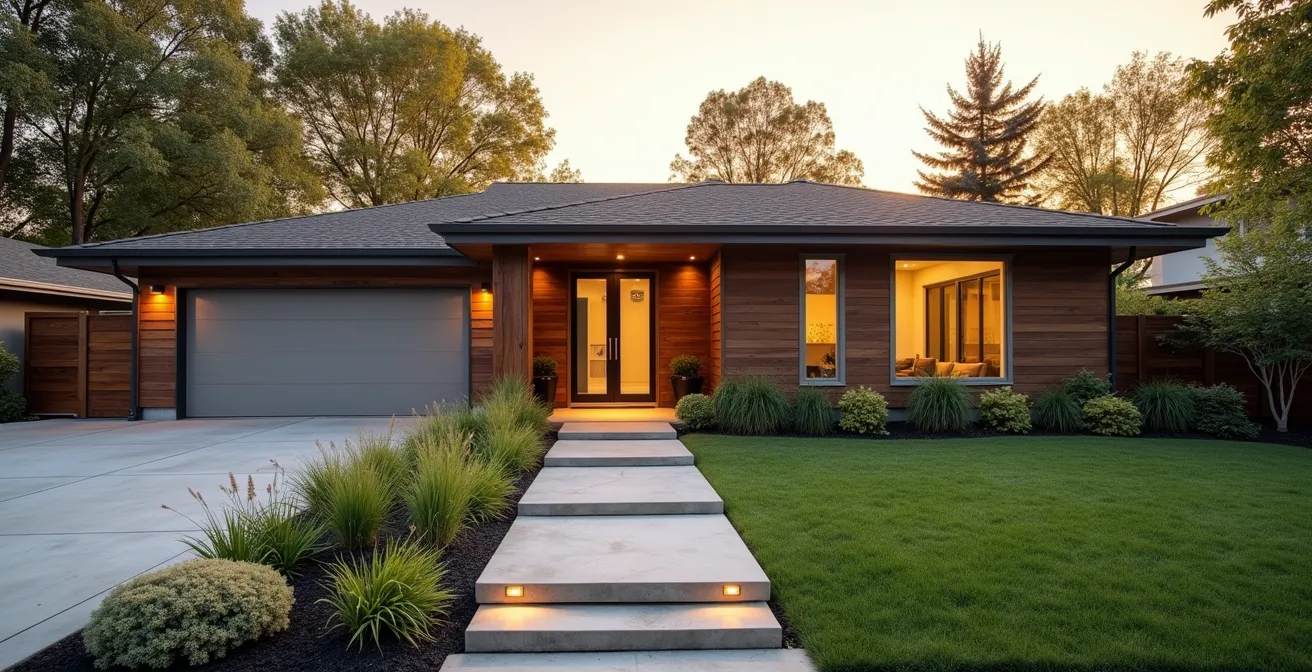
The table below, based on an analysis of accessibility options, breaks down the financial and aesthetic implications. It clearly shows that while a ramp might solve an immediate problem, investing in a home with an integrated level entry is the superior long-term financial strategy.
| Entry Type | Installation Cost | Maintenance | Resale Impact | Best For |
|---|---|---|---|---|
| Zero-Step Entry | $3,000-$7,000 (new build) | Minimal | Positive – Universal appeal | New construction, slab foundations |
| Modular Aluminum Ramp | $1,500-$4,000 | Annual inspection | Neutral – Removable | Temporary needs, rentals |
| Wooden Ramp | $800-$2,500 | Regular sealing/repairs | Negative – Dated appearance | Budget-conscious, DIY |
| Vertical Platform Lift | $5,000-$15,000 | Professional service required | Mixed – Depends on integration | Limited space, high rises |
For a homebuyer focused on future-proofing their investment, the verdict is clear. Prioritize properties with existing zero-step entries or those where one can be easily created. This choice transforms a potential accessibility need into a powerful, value-adding feature.
The Risk of Relocation Stress Syndrome in Seniors Over 80
While the financial and physical aspects of moving are often the primary focus, the psychological toll, especially for older adults, can be profound. Relocation Stress Syndrome (RSS), also known as transfer trauma, is a documented condition characterized by anxiety, confusion, and loneliness resulting from a move to a new environment. For seniors over 80, who may have lived in their home for decades, the risk is particularly high. The move represents not just a change of address but a loss of familiarity, community, and a lifetime of memories tied to a specific place.
The symptoms of RSS can range from mild sadness and irritability to severe depression and cognitive decline. This emotional upheaval stems from a loss of control and the immense effort required to adapt to a new home, new routines, and a new neighborhood. Acknowledging this risk is the first step in mitigating it. The decision to move should, whenever possible, be a proactive choice made with ample time for mental and emotional preparation, rather than a reactive decision forced by a health crisis.
To combat Relocation Stress Syndrome, a gradual acclimatization process is key. This includes:
- Beginning to tour potential new locations 3-6 months before a planned move.
- Using tools like Google Street View for virtual walks to build familiarity with a new neighborhood.
- Involving the senior in all decision-making to maintain a sense of agency and control.
- Mapping out new locations for familiar routines, such as the nearest coffee shop, pharmacy, or park.
- Planning multiple short visits to the new home before the final move-in day.
By treating the move as a process rather than a single event, you can significantly reduce the associated stress and help ensure a smoother, healthier transition. This psychological equity is as valuable as any financial equity built in a home.
How to Spot “Visitability” Features in a Potential New Home?
Beyond full-time accessibility for the resident, a key concept in smart home design is “visitability.” A visitable home is one where a person with mobility issues can comfortably visit, even if they don’t live there. This means they can get into the house, move through the main floor, and access a bathroom. From a real estate perspective, visitability is a massive asset. It broadens your home’s appeal to a wider range of buyers and ensures you can host friends and family of all ages and abilities for years to come.
As The RL Mace Universal Design Institute explains, this isn’t about a complete overhaul but about three core principles. In their AARP HomeFit guide, they state:
Visitability requires that buildings have accessible routes wide enough to accommodate wheelchairs, free of obstacles with gentle slopes for limited mobility.
– The RL Mace Universal Design Institute, AARP HomeFit Model Ordinance Guide
In today’s digital-first real estate market, you can perform significant due diligence from your computer. By carefully examining listing photos, virtual tours, and satellite imagery, you can pre-qualify properties for these valuable features before even scheduling a showing. This saves time and focuses your search on homes with the best long-term potential.
Your Digital Vetting Checklist for Visitability:
- Review listing photos for a clear view of at least one no-step entry, either at the front, back, or through the garage.
- Use virtual tours to visually measure doorways; look for a minimum clearance of 36 inches for main entryways.
- Identify a bathroom on the main floor and verify its door opening is at least 32 inches wide.
- Assess hallway width by using furniture as a reference point; you’re looking for at least 42 inches of clear width for comfortable passage.
- Zoom in on close-up photos to spot lever-style door handles and rocker-panel light switches, which are easier to operate.
- Use satellite or street view imagery to check the grade of the driveway and walkways leading to the entrance.
- Look for open floor plans in key areas (kitchen, living room, main bathroom) that could accommodate a 5-foot turning radius for a wheelchair.
When to Buy Your “Final” Home: Pre-Retirement vs Post-Health Event?
One of the most critical strategic decisions a retiree will make is *when* to move into their “forever home.” The choice typically falls into two camps: a proactive move made pre-retirement or in early retirement, versus a reactive move forced by a significant health event or mobility change. From a financial and psychological standpoint, the advantages are overwhelmingly in favor of a proactive, pre-emptive move.
Buying your final home while you are still active, healthy, and potentially still earning an income provides immense leverage. You have more energy for the moving process, a clearer mind for complex financial decisions, and a better chance of qualifying for favorable mortgage terms if needed. This timing transforms the move from a stressful necessity into an empowered choice, giving you control over where and how you want to live the next phase of your life. Waiting until a crisis hits often means making rushed decisions under duress, with fewer choices and higher costs.

Making the move early is a powerful act of financial foresight. It allows you to lock in housing costs and potentially reduce expenses, stretching your retirement savings further.
Case Study: The Financial Impact of Pre-Retirement Downsizing
Research on retirement readiness shows that downsizing or rightsizing before retirement can be a game-changer. By moving to a home with lower taxes, insurance, and utility costs, individuals can significantly reduce their monthly expenses. This freed-up capital can be reallocated to retirement accounts, travel, or hobbies. Furthermore, making the move while still healthy allows for a more thoughtful and less emotional process of sorting through possessions, leading to better outcomes and an improved overall quality of life during the transition.
The ideal time to make this move is often in the 5-10 years leading up to your planned retirement date. This window provides ample time to research, plan, and execute the move without the pressure of a sudden deadline, securing both your lifestyle and your financial future.
Downsizing vs Modifying: Which Is Financially Smarter in the Long Run?
The classic dilemma for many empty-nesters and retirees is whether to stay and modify their current home or move to a smaller, more manageable one. While downsizing seems like the obvious path to a simpler life, the decision is far more complex than just square footage. The financially and emotionally smarter choice depends heavily on the “why” behind the decision: are you being pulled toward a better lifestyle, or pushed by the burdens of your current home?
Modifying your current home can seem appealing. You know the house, you love your neighborhood, and you avoid the upheaval of a move. However, retrofitting an older, multi-story home can become a financial black hole. Widening doorways, adding a full bathroom on the main floor, or installing a stairlift are expensive, invasive projects that may not add equivalent resale value. It can be a case of throwing good money after bad. In contrast, moving to a home that already has these features built-in (e.g., a newer single-story condo or patio home) can be a much cleaner, more predictable financial move.
The psychological dimension is equally critical. A study on the topic reveals the importance of motivation in this decision. As the Journal of Environmental Psychology notes:
Placing greater importance on push factors rather than pull factors when downsizing was associated with lower well-being in environmental mastery, purpose in life, and self-acceptance.
– Journal of Environmental Psychology, When Less is More: Downsizing and Well-being Study
This means if your decision to move is driven by positive “pull” factors—like the desire for a vibrant new community, proximity to family, or a home that better supports your hobbies—you are more likely to thrive. If you are “pushed” out by negative factors—overwhelming maintenance, high taxes, or loneliness—the outcome may be less positive. Therefore, the smartest long-term decision is often to downsize proactively toward a desirable lifestyle, rather than waiting to be forced to modify your home out of necessity.
When to Renovate: Proactive vs Crisis-Response Construction?
Whether you decide to stay in your current home or buy a new one that needs a few tweaks, the timing of renovations is everything. There are two approaches: proactive construction, where you make changes thoughtfully over time, and crisis-response construction, where you rush to make modifications after a fall or a medical emergency. From a financial and logistical standpoint, the proactive approach is vastly superior.
Crisis renovations are invariably more expensive and stressful. You’re on a tight deadline, contractors know you’re in a vulnerable position, and there’s no time to properly vet bids or plan for aesthetics. The result is often a costly, clinical-looking fix that detracts from your home’s value. In stark contrast, proactive renovations can be integrated into your home’s design gracefully and affordably. For example, when you’re already planning to remodel a bathroom, adding reinforced walls for future grab bars is a minor incremental cost. Doing it later as a standalone project is a major expense.
The cost difference is staggering. According to contractor estimates, integrating universal design features during new construction or a planned renovation might add $500 to $5,000 to the total project. However, the cost for an emergency retrofit to make a home accessible after a crisis can easily exceed $15,000 or more. By planning ahead, you can implement a phased strategy that aligns with your budget and timeline.
A smart, phased approach to renovation might look like this:
- Phase 1 (Low Cost: $500-$2,000): Immediately replace all doorknobs with lever-style handles, improve lighting in hallways and on stairs, and add motion-sensor lights.
- Phase 2 (Medium Cost: $2,000-$5,000): During a routine bathroom refresh, reinforce the walls around the toilet and shower for the future installation of grab bars.
- Phase 3 (High Cost: $5,000+): When undertaking a major remodel, install a curbless, zero-threshold shower and widen key doorways to 36 inches.
- Phase 4 (Major Investment): If your long-term plan requires it, add a first-floor bedroom suite or install a home elevator as a planned capital improvement.
This methodical approach preserves your capital, enhances your home’s value, and prevents the chaos of a crisis-driven construction project.
Key Takeaways
- Universal design is a luxury feature that boosts resale value; search for it as a strategic asset, not a medical necessity.
- Proactive decisions—moving or renovating before a health crisis—are dramatically cheaper and lead to better long-term outcomes.
- Use digital tools to vet properties for “visitability” features like zero-step entries and wide hallways before you even schedule a visit.
How to Prepare for an Occupational Therapy Home Assessment?
Whether you’re modifying your current home or evaluating a new one, one of the most valuable investments you can make is an Occupational Therapy (OT) home assessment. An OT is a trained professional who can analyze how you interact with your environment and provide expert, personalized recommendations to improve safety, comfort, and independence. They go far beyond generic advice, offering solutions tailored to your specific routines and physical needs.
Preparing for the assessment will help you get the most out of it. Before the OT arrives, make a list of daily activities that are becoming difficult or that you worry might become difficult in the future. This could be anything from reaching a high shelf in the kitchen to stepping into the bathtub. Be ready to walk the OT through your typical day, from the moment you wake up to when you go to bed. The more information you provide about your lifestyle and challenges, the more targeted and effective their recommendations will be.
The goal of an OT assessment is to create a practical, prioritized action plan. Local Area Agencies on Aging can often connect you with qualified therapists. These experts identify hazards and work with you to find solutions that fit your budget and aesthetic preferences. Remember, their report is not just a list of problems; it’s a blueprint for a contractor, enabling you to get accurate bids for a single, comprehensive renovation rather than a series of costly, piecemeal projects. This turns a potentially overwhelming process into a manageable, strategic project that secures your ability to age in place safely and comfortably.
To put these strategies into practice, your next step is to begin assessing potential properties—or your current one—with this new, investment-focused lens. Start building your digital vetting checklist and analyzing the market not just for a place to live, but for a home that will provide value for a lifetime.
Frequently Asked Questions About Occupational Therapy Home Assessments
What are the top 3 safety modifications with the highest impact for the lowest cost?
OTs typically recommend grab bars in bathrooms ($20-50 each), improved lighting ($50-200), and removing throw rugs (free) as the most cost-effective safety improvements with immediate impact.
Can you provide a prioritized report that I can give directly to a contractor?
Yes, most OTs can create a detailed report with specific measurements, product recommendations, and installation priorities that contractors can use for accurate bidding and implementation.
How do we balance medical necessity with maintaining home aesthetics?
Modern universal design products come in attractive finishes and styles. OTs can recommend solutions that blend with your decor while meeting safety needs, avoiding the institutional look.