Effective immune defense for seniors is not about ‘boosting’ during an illness, but about systematic, year-round management of health.
- Medical prophylaxis, including crucial shingles and pneumonia vaccines, forms the non-negotiable foundation of this system.
- Lifestyle fortifications like strategic supplementation (Vitamin D), moderate exercise, and social engagement significantly reduce vulnerability.
Recommendation: Implement a personal Senior Health Calendar to proactively track screenings, vaccinations, and seasonal adjustments for resilient health.
For many seniors, the approach of peak viral seasons brings a familiar sense of apprehension. The focus often narrows to basic advice like washing hands, getting more sleep, and eating a balanced diet. While these are undoubtedly beneficial habits, they represent a reactive stance against an ever-present challenge. Relying on these measures alone often fails to address the underlying, age-related changes in the immune system, a process known as immunosenescence.
True resilience against common but potentially severe illnesses requires a shift in perspective. The key is not to find a single “boost” but to adopt a structured, proactive framework for your health. This guide presents a more robust strategy: the creation of a personal ‘Immune Defense Calendar.’ This system integrates essential medical interventions with evidence-based lifestyle modifications, transforming immune health from a seasonal concern into a year-round priority.
By following this systematic approach, you can move beyond simple prevention and actively fortify your body’s defenses. We will explore the critical pillars of this strategy, from non-negotiable vaccinations and strategic supplementation to the powerful, often-underestimated roles of social connection and proactive planning in maintaining your health and independence.
This article provides a detailed roadmap for building your personal immune defense strategy. The following sections break down each essential component, offering actionable guidance to help you take control of your health throughout the year.
Summary: A Senior’s Guide to Building a Resilient Immune System
- Why Shingles Vaccinations Are Crucial Even If You Had Chickenpox?
- How to Track Boosters for Tetanus and Pneumonia After 65?
- The Risk of Relying on “Natural Immunity” for Senior Respiratory Health
- How to Modify Vitamin D Intake During Low-Sunlight Months?
- Lifestyle Changes vs Medical Prophylaxis: What Stops Heart Disease?
- How to Fortify Your Immune Response Before Flu Season Starts?
- Why Social Interaction Boosts Immune System Function by 20%?
- How to Create a Senior Health Calendar That Covers All Essential Screenings?
Why Shingles Vaccinations Are Crucial Even If You Had Chickenpox?
A common misconception is that having chickenpox as a child provides lifelong immunity from related viruses. This is incorrect and potentially dangerous. The varicella-zoster virus, which causes chickenpox, does not leave the body. Instead, it lies dormant in nerve tissue and can reactivate decades later as shingles (herpes zoster), a painful rash that can lead to severe, long-term complications like postherpetic neuralgia (PHN), a condition of persistent nerve pain.
The risk of this reactivation increases significantly with age as the immune system naturally weakens. Therefore, relying on past infection for protection is an inadequate strategy. Modern medical prophylaxis is the most effective tool available. The current recombinant shingles vaccine (Shingrix) is a non-live vaccine, making it safe for most seniors, and is remarkably effective. Evidence-based data is clear on this point.
According to the Centers for Disease Control and Prevention (CDC), the Shingrix vaccine has demonstrated over 90% effectiveness at preventing shingles in adults 50 and older. This high level of protection is a critical component of a proactive health strategy, preventing not only the initial illness but also its debilitating and chronic consequences. Vaccination is not just about avoiding a rash; it is about preserving quality of life.
How to Track Boosters for Tetanus and Pneumonia After 65?
Beyond the critical shingles vaccine, a comprehensive immunization plan for seniors must include boosters for other serious diseases. Tetanus, diphtheria, and pertussis (Tdap), as well as pneumococcal pneumonia, pose significant risks to older adults. Immunity from earlier vaccinations wanes over time, making boosters a non-negotiable part of maintaining your defenses. The challenge, however, often lies in tracking when these shots are due.
The most effective method is to create a centralized, personal health record. This can be a dedicated “health passport” document, a digital file, or a specific section in your personal calendar. This record should list every vaccination you’ve received, the date it was administered, and the date the next booster is recommended. For instance, a Tdap booster is typically advised every 10 years. Pneumococcal vaccines have their own specific schedule that should be discussed and planned with your healthcare provider.
Visualizing this schedule on a calendar transforms abstract medical advice into a concrete, manageable plan. This act of tracking is an empowering step in taking ownership of your health.
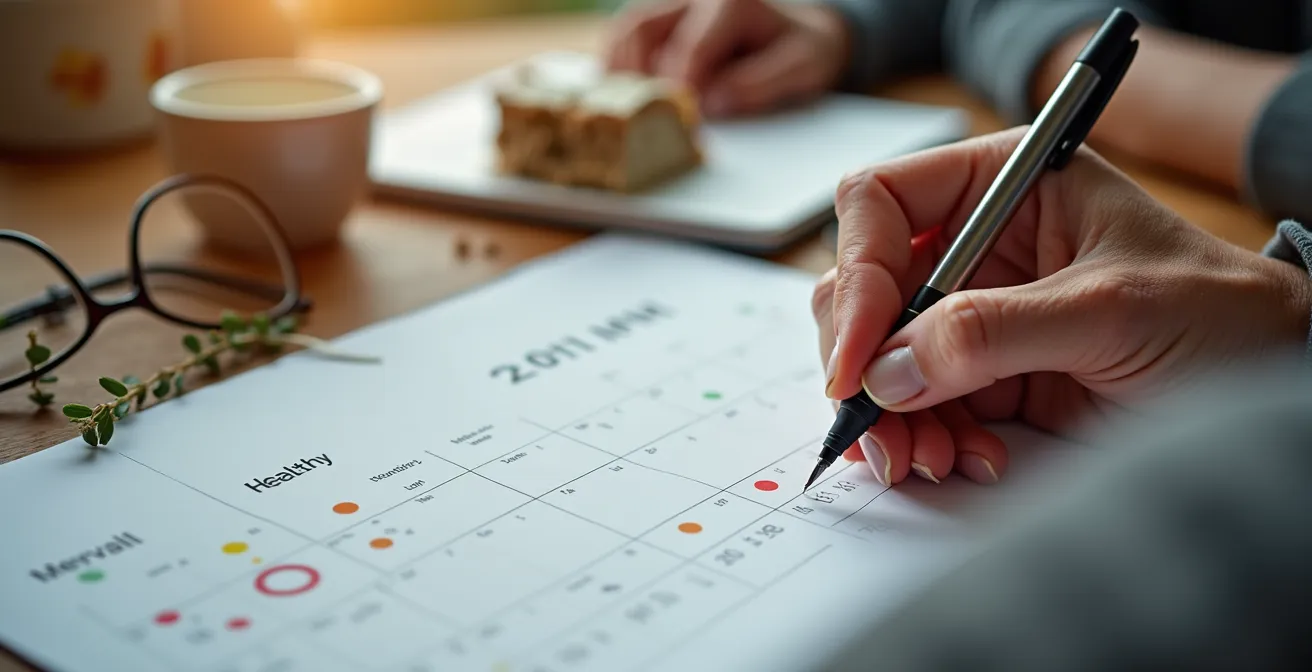
As shown in this image, the simple act of marking your calendar creates a tangible commitment to your well-being. Set annual reminders in your phone or calendar to review your vaccination status with your primary care physician. This ensures that no crucial booster is missed and your immune shield remains strong and up to date, providing a reliable defense against preventable diseases.
The Risk of Relying on “Natural Immunity” for Senior Respiratory Health
The concept of “natural immunity”—the idea that surviving an infection provides superior, long-term protection—is a dangerous myth for older adults, particularly concerning respiratory illnesses. The primary reason for this is immunosenescence, the gradual decline of the immune system’s effectiveness that occurs with age. While a younger person’s immune system might mount a robust and lasting response to an infection, an older adult’s response is often weaker and less durable.
Furthermore, repeated infections throughout life can have a cumulative negative effect. Instead of building a stronger wall, each infection can leave behind residual inflammation, contributing to a state of chronic, low-grade inflammation that is a hallmark of many age-related diseases. This perspective is supported by leading research in the biology of aging. As one expert in the field explains, the long-term consequences of viral exposure are a serious concern.
Chronic inflammation stemming from immune system dysfunction is associated with many of the diseases of aging.
– David Furman, PhD, Buck Institute Research Publication
This statement underscores the core risk: relying on past infections as a primary defense strategy ignores the lasting damage they can cause. Vaccination, by contrast, trains the immune system to recognize a threat without the collateral damage of a full-blown illness and its associated inflammation. For senior respiratory health, a proactive vaccination strategy is unequivocally safer and more effective than weathering repeated illnesses.
How to Modify Vitamin D Intake During Low-Sunlight Months?
Vitamin D plays a pivotal role in immune function, yet deficiency is common, especially among seniors and during autumn and winter when sun exposure is limited. Sunlight is the primary source for Vitamin D production in the skin, so as daylight hours decrease, proactive management of your intake becomes essential. This is a clear example of where strategic supplementation becomes a key part of your Immune Defense Calendar.
However, simply taking a supplement is not enough; the approach must be personalized and evidence-based. Blindly supplementing can be ineffective or, in rare cases of extremely high doses, lead to toxicity. The first step is to establish a baseline by understanding your current level. From there, you can work with your healthcare provider to create a targeted plan to achieve and maintain optimal levels for immune health.
The following checklist provides a scientifically grounded protocol for managing your Vitamin D intake, particularly during the darker months of the year.
Your Action Plan: Optimizing Vitamin D Levels
- Request a 25-hydroxy vitamin D blood test, which is the most accurate way to measure your body’s Vitamin D stores.
- Work with your doctor to interpret the results and set a target, typically aiming for levels between 30 and 50 ng/mL for optimal immune support.
- Take Vitamin D supplements with a meal containing healthy fats (like avocado, nuts, or olive oil) to maximize absorption, as it is a fat-soluble vitamin.
- Incorporate food sources rich in Vitamin D, such as fatty fish (mackerel, salmon), sardines, and UV-exposed mushrooms, into your diet.
- Be aware that even minimal sun protection significantly impacts synthesis; use of sunscreen with an SPF of 15 reduces Vitamin D production in the skin by 99.9%.
By following this systematic approach, you can ensure your body has the necessary resources to support a robust immune response, effectively compensating for the lack of sunlight during peak viral seasons.
Lifestyle Changes vs Medical Prophylaxis: What Stops Heart Disease?
When considering the prevention of major health events like heart disease, a condition often exacerbated by seasonal illnesses like the flu, a question arises: what is more effective, lifestyle changes or medical prophylaxis? The answer, supported by extensive research, is that these are not opposing forces but rather a powerful, synergistic partnership. Framing it as a choice between one or the other is a false dichotomy; the most effective strategy involves both.
Lifestyle modifications—such as regular aerobic exercise, a diet rich in anti-inflammatory foods, and stress management—work by improving the body’s overall systemic health. They reduce chronic inflammation and improve the function of blood vessels. Medical prophylaxis, such as statins or blood pressure medications, works by targeting specific biological pathways known to contribute to cardiovascular risk. As a public health matter, it’s crucial to understand how these approaches complement each other.
The following table, based on immunological research, outlines the distinct benefits and mechanisms of each approach, highlighting why a combined strategy is superior for long-term protection.
| Approach | Primary Benefits | Mechanism | Evidence Level |
|---|---|---|---|
| Lifestyle Changes | Reduces inflammation, improves endothelial function | Anti-inflammatory cellular effects, increased white blood cells | Strong |
| Medical Prophylaxis | Direct cardiovascular protection | Pharmaceutical intervention on specific pathways | Strong |
| Combined Approach | Synergistic effects, reduced medication needs | Lifestyle enhances medication efficacy | Emerging |
As this analysis from research in Frontiers in Immunology shows, lifestyle changes can enhance the effectiveness of medication, potentially allowing for lower doses and reducing side effects. For example, regular aerobic activity produces anti-inflammatory effects and increases the circulation of immune cells, creating a healthier internal environment in which medications can work more efficiently. Therefore, a truly preventative approach to heart health integrates both pillars into a cohesive daily routine.
How to Fortify Your Immune Response Before Flu Season Starts?
The best time to prepare for flu season is weeks before it arrives. Fortifying your immune response is not an overnight process; it requires a deliberate, multi-faceted approach beginning in the early autumn. The single most important step in this preparation is scheduling your annual flu vaccine. For optimal protection, it is recommended to receive this vaccine before the end of October, allowing your body approximately two weeks to build a full antibody response before circulation of the virus typically peaks.
The effectiveness of this single action cannot be overstated. For older adults, who are disproportionately affected by severe flu complications, the vaccine is a critical shield. Data shows that the annual flu shot reduces the risk of flu-related hospitalizations in older adults by a significant margin, often around 40 percent. This makes it a cornerstone of any serious immune defense plan.
Alongside this essential medical step, several lifestyle strategies can prime your immune system. First, prioritize a consistent sleep schedule of 7-9 hours per night, as sleep is when the body performs critical immune cell production and repair. Second, begin a moderate exercise routine if you don’t have one. Even 15-20 minutes of moderate-intensity activity, like brisk walking, can help boost immunity by increasing the circulation of natural killer (NK) cells, a type of white blood cell that targets infected cells. Finally, consider your indoor environment. As you spend more time inside, using a HEPA filter and maintaining indoor humidity between 40-60% can help reduce airborne virus transmission.
Why Social Interaction Boosts Immune System Function by 20%?
While the exact figure of a “20% boost” is a simplified representation, the underlying scientific principle is robust and well-documented: strong social connections have a direct and measurable positive impact on immune function. The mechanism is twofold, involving both psychological and behavioral pathways. From a public health perspective, recognizing social health as a component of physical health is a critical step in comprehensive wellness for seniors.
Psychologically, positive social interaction is a powerful antidote to stress and loneliness, both of which are known to suppress the immune system. When you feel isolated or chronically stressed, your body produces higher levels of the hormone cortisol. Elevated cortisol can inhibit the production and function of lymphocytes, including the crucial T-cells that are responsible for fighting off infections. Conversely, engaging with friends, family, or community groups helps lower cortisol levels, allowing your immune system to function more effectively.
Behaviorally, being socially active often encourages other healthy habits. People who regularly meet with others are more likely to be physically active, whether it’s through a walking club, a dance class, or simply running errands. Activities as simple as stretching or yoga, especially when done in a group setting, help keep those vital T-cells circulating throughout the body, ready to defend against pathogens. This combination of reduced stress and increased activity creates a powerful, synergistic effect that fortifies your body’s natural defenses in a way that cannot be achieved in isolation.
Key Takeaways
- True immunity for seniors is a managed system, not a quick fix achieved during illness.
- Medical prophylaxis, especially vaccinations for Shingles, Flu, and Pneumonia, is the most effective and non-negotiable tool for preventing severe outcomes.
- A personalized Senior Health Calendar is an essential framework for tracking screenings, boosters, and seasonal strategies like Vitamin D supplementation.
How to Create a Senior Health Calendar That Covers All Essential Screenings?
We have discussed the individual components of a robust immune defense: vaccinations, strategic supplementation, and lifestyle factors. The final and most critical step is to integrate them into a cohesive, year-round plan. The “Immune Defense Calendar” is the practical tool that brings this entire strategy to life. It moves you from knowing what to do to ensuring it gets done. Creating this calendar is perhaps the most empowering action a senior can take to safeguard their health and independence.
This calendar serves as your personal health command center. It should map out not only vaccine boosters but also all other essential health milestones for the year. The goal is to distribute these tasks throughout the year to make them manageable and to align them with seasonal needs. For example, scheduling an annual physical in January provides a baseline for the year, while planning for a flu shot in October prepares you specifically for the upcoming viral season. This proactive scheduling is vital, as official data consistently shows that adults 65 and older account for 70-85% of seasonal flu deaths and the majority of hospitalizations.
A sample structure for your annual health calendar might look like this:
- January: Schedule your annual physical exam and complete a comprehensive bloodwork panel.
- April: Conduct a home safety assessment to identify and mitigate fall risks.
- July: Schedule routine vision and hearing screenings.
- September: Begin or adjust Vitamin D supplementation in preparation for low-sunlight months.
- October: Get your annual flu vaccine and schedule a medication review with your pharmacist to check for interactions.
- Year-Round: Mark dates for regular Tdap or Pneumonia boosters as determined with your doctor.
This calendar is a living document. By planning ahead, you transform health management from a source of anxiety into a series of controlled, predictable actions, ensuring you are always one step ahead in protecting your well-being.
To put this knowledge into practice, the next logical step is to start building your own personalized Senior Health Calendar today. Begin by scheduling a consultation with your healthcare provider to establish your vaccination status and screening needs, forming the foundation of your proactive, year-round defense plan.