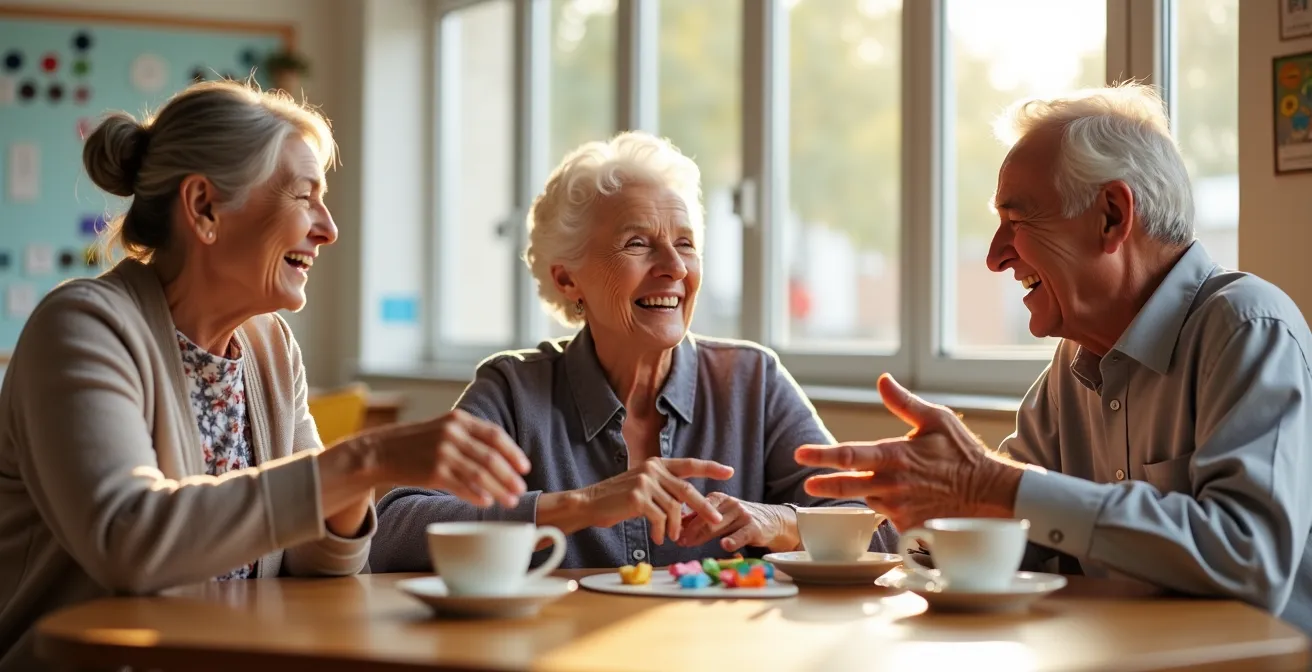
Strategic social connection is not a hobby; it’s a potent biological intervention that directly modulates the mechanisms of aging.
- Building a “Social Portfolio”—a mix of deep, weak, and purpose-driven ties—triggers a specific neurochemical cocktail that strengthens immune function.
- Social isolation is linked to inflammatory markers and specific proteins that accelerate age-related diseases.
Recommendation: Audit your current social interactions not by quantity, but by their biological purpose, and start strategically investing in activities that build your portfolio.
For many retirees, the newfound freedom is often channeled into leisure activities like golf, travel, or hobbies. While enjoyable, these pursuits may not provide the specific type of human connection that science now recognizes as a fundamental pillar of longevity. The common advice to “stay social” is often vague and unhelpful, treating connection as a pleasant pastime rather than a critical health strategy. We are told to join clubs or see family, but this advice overlooks the profound biological reality: not all social interactions are created equal.
The conversation around healthy aging is dominated by diet, exercise, and medical check-ups. Yet, a growing body of evidence from social gerontology and psychoneuroimmunology reveals a powerful, often-neglected factor: the structure and quality of our social lives. The distinction between loneliness (a subjective feeling) and social isolation (an objective lack of contact) is crucial. Both are detrimental, but understanding the mechanisms behind their impact allows for a more targeted approach. This is where the old paradigm of simply “being around people” fails.
But what if the key wasn’t just *more* social contact, but the *right kind*? This article reframes socialization through a scientific lens, introducing the concept of a “Social Portfolio.” Like a financial portfolio, a social portfolio is a deliberately curated mix of different types of relationships and interactions, each serving a distinct biological purpose. It’s about moving from passive socializing to an active, strategic investment in your cellular health. We will explore how specific social activities trigger a protective neurochemical cocktail, how to choose engagements that match your physical and psychological needs, and how to build a robust portfolio that acts as a powerful prophylaxis against age-related decline.
This guide will provide a structured path to understanding and building your own Social Portfolio. We will deconstruct the science, offer practical strategies for every personality type, and identify the modern resources available to foster meaningful connections.
Summary: Building a Resilient Social Portfolio for Longevity
- Why Social Interaction Boosts Immune System Function by 20%?
- How to Choose Volunteer Work That Matches Your Physical Ability?
- Intergenerational Programs: Benefits of Mentoring Youth for Senior Health
- The Risk of Introversion: Socializing Strategies for Private People
- When to Schedule Outings to Match Peak Energy Levels?
- How to Rebuild a Social Network After Retirement Isolation?
- Lifestyle Changes vs Medical Prophylaxis: What Stops Heart Disease?
- How to Find a Senior Center That Offers More Than Just Bingo?
Why Social Interaction Boosts Immune System Function by 20%?
The idea that friendship is good for the soul is ancient wisdom, but modern science reveals it is fundamentally good for our cells. Social interaction is not merely a psychological comfort; it is a powerful biological intervention that directly modulates the immune system. Chronic loneliness acts as a long-term stressor, and studies have found that loneliness increases the risk of premature death by 26%. This isn’t a statistical quirk; it’s a reflection of deep physiological processes being disrupted.
At a molecular level, social disadvantage has been shown to leave a “proteomic signature” of accelerated immune aging. Research has identified 14 specific age-related proteins linked to social isolation that increase the risk of up to 66 different age-related diseases. This demonstrates a direct, measurable pathway from a lack of social connection to cellular breakdown. Conversely, positive social engagement triggers a beneficial neurochemical cocktail of oxytocin, endorphins, and dopamine. These are not just “feel-good” chemicals; they have tangible effects:
- Oxytocin, released during physical comfort like hugging, directly modulates the immune response, helping to lower inflammation.
- Endorphins, triggered by shared group laughter, act as natural painkillers and have been shown to enhance immune cell activity.
- Dopamine, stimulated by collaborative problem-solving or working toward a shared goal, enhances motivation and physiological resilience.
Building a Social Portfolio is therefore about strategically engaging in activities that produce this protective cocktail. It’s a conscious effort to use social connection as a tool to regulate your body’s core functions and defend against the inflammatory processes that drive aging.
How to Choose Volunteer Work That Matches Your Physical Ability?
Volunteering is a cornerstone of a strong Social Portfolio, offering a sense of purpose that is highly protective for health. However, the “one-size-fits-all” approach is a recipe for burnout or physical strain. The key is to strategically select roles that align not only with your interests but also with your physical capacity and your specific social goals—whether that’s forging deep connections or building a wider network of weaker ties.
To make an informed choice, think of volunteer opportunities in terms of their physical requirements and social outcomes. The goal is sustainability and enjoyment, not heroic effort. For example, an individual with limited mobility can still achieve a profound sense of purpose and connection through seated, one-on-one activities, while someone with more energy might thrive in a dynamic, event-based role. The illustration below highlights how different levels of physical engagement can be adapted within a community setting to ensure everyone can contribute meaningfully.
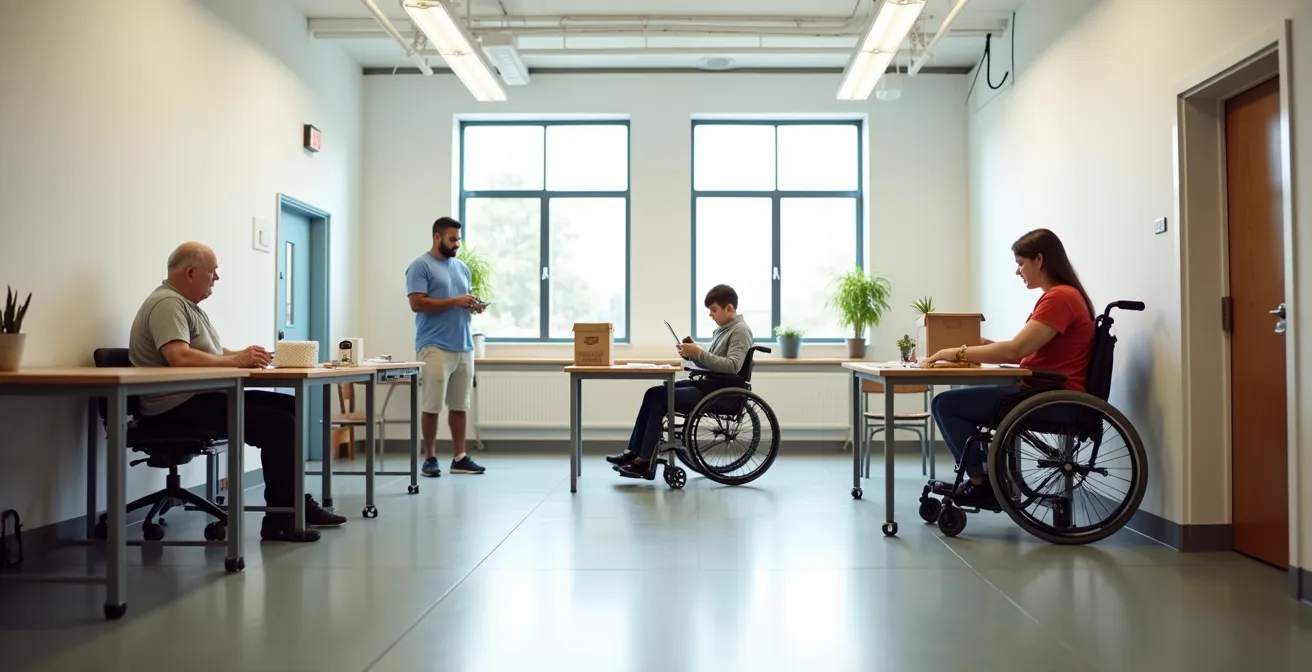
As the image demonstrates, an adaptive environment allows for a variety of contributions. This strategic alignment is crucial. It ensures that the act of giving back is energizing, not draining, thereby maximizing the neurochemical rewards of the experience. Before committing, perform a personal audit: What is your primary social goal? What is your realistic physical capacity on a weekly basis? The following table can help structure this decision-making process.
This comparative table offers a clear framework for aligning your volunteering choices with both your physical abilities and the specific social goals you’ve set for your Social Portfolio.
| Social Goal | Activity Type | Physical Requirement | Example Tasks |
|---|---|---|---|
| Deep Connection | One-on-one companionship | Minimal – seated | Reading to seniors, phone check-ins |
| Weak Tie Building | Event support | Light – mobile | Registration desk, greeting visitors |
| Purpose-Driven | Skill-based remote | None – home-based | Online tutoring, grant writing |
| Micro-Volunteering | Brief tasks | Flexible | Data entry, citizen science analysis |
Intergenerational Programs: Benefits of Mentoring Youth for Senior Health
One of the most powerful elements to include in a Social Portfolio is an intergenerational connection. Programs that pair older adults with young people provide a unique synergy where both parties benefit immensely. For seniors, mentoring youth is not just a heartwarming activity; it is a significant health-promoting behavior with measurable physical and cognitive advantages. The simple act of keeping up with a child provides a natural, enjoyable form of physical activity.
Older adult mentors who participate in intergenerational mentoring programs, such as Experience Corps, can improve physical health, cognitive function, and psychosocial well-being.
– County Health Rankings & Roadmaps Research Team, County Health Rankings & Roadmaps systematic review
The benefits are not just anecdotal. Research shows that older adults who regularly volunteer with children burn 20% more calories weekly, have fewer falls, and perform better on memory tests. This is because mentoring requires a high level of cognitive engagement—problem-solving, teaching, and adapting to a younger person’s perspective. This mental workout helps build cognitive reserve, a key factor in staving off dementia and maintaining mental acuity.
Programs like the Foster Grandparent Program in the United States exemplify this model, where seniors act as mentors and tutors for at-risk youth. The sense of purpose derived from seeing a child’s academic performance and confidence grow provides a powerful dopamine boost, reinforcing the senior’s sense of value and contribution. This moves beyond simple socializing into a role of legacy-building, which is profoundly beneficial for psychosocial well-being in later life.
The Risk of Introversion: Socializing Strategies for Private People
For a significant portion of the population, the standard advice to “get out there and meet people” is not just unhelpful; it’s exhausting. Introversion is not shyness or social anxiety, but a temperament where social energy is expended rather than gained in large groups. According to some estimates based on the Myers-Briggs Foundation’s work, around 50-74% of the population may have introverted tendencies. For these individuals, building a Social Portfolio requires a different, more deliberate strategy that prioritizes quality over quantity and respects their need for solitude.
The risk for private people is not their introversion itself, but the slide into complete social isolation when life transitions like retirement remove built-in social structures. The solution is not to become an extrovert, but to build a sustainable social life that works with, not against, one’s nature. This is where the “Anchor and Satellite” model comes in. It provides a framework for creating a balanced social life without causing burnout.
- Anchor Relationships (1-3): These are your deep, trusted connections—a spouse, a sibling, a lifelong friend. They provide the core emotional support and are the bedrock of your portfolio. The focus is on depth, not breadth.
- Satellite Activities: These are low-pressure, structured group activities that build “weak ties.” Think book clubs, walking groups, or skill-based classes. The shared activity is the focus, taking the pressure off of making small talk.
- Scheduled Solitude: This is a non-negotiable part of the strategy. Deliberately scheduling alone time for hobbies, reflection, or simply recharging is essential to maintain the energy for social engagement.
This model allows introverts to build a robust Social Portfolio by focusing on a few meaningful one-on-one interactions and supplementing them with structured, low-stakes group settings. Planning exit strategies and setting time boundaries for social events are also crucial tactics to prevent overstimulation.
When to Schedule Outings to Match Peak Energy Levels?
Just as we have different personality types, we also have different biological rhythms, or chronotypes. Your chronotype dictates when you naturally have the most physical and mental energy during the day. Forcing social activities into low-energy periods is a recipe for a poor experience and can reinforce a desire to stay home. A strategic Social Portfolio involves scheduling interactions to align with your personal “social prime time.”
The first step is to conduct a simple social energy audit. This isn’t a complex medical test, but a week of self-observation. By tracking your energy, mood, and sociability at different times, you can identify the windows when you feel most alert, clear-headed, and open to connection. This awareness allows you to schedule demanding social activities, like meeting new people or attending a large event, during your peak hours. Conversely, you can reserve lower-energy periods for less taxing interactions, such as a quiet walk with a close friend.

As depicted, the process of tracking is a simple but powerful act of self-awareness. It transforms scheduling from a game of chance into a data-driven strategy. One effective technique is the “Social Appetizer,” which involves scheduling a short, 15-20 minute positive interaction early in the day. This could be a phone call or a brief chat with a neighbor. This small “win” can generate positive momentum and make you more receptive to further social engagement later on.
Action Plan: Your Chronotype and Social Energy Audit
- Track your energy levels on a 1-10 scale hourly for one full week.
- Note your general mood and willingness to socialize at different times of the day.
- Analyze the data to identify your consistent “social prime time” windows.
- Schedule high-effort social activities (e.g., meeting new groups) during these peak windows.
- Use lower-energy periods for low-effort, comfortable social interactions (e.g., calls with family).
How to Rebuild a Social Network After Retirement Isolation?
Retirement, the loss of a spouse, or moving to a new area can decimate a social network that took decades to build. The prospect of starting from scratch can feel overwhelming, especially for those who are naturally more private. The key is not to aim for a dozen new best friends overnight, but to use a methodical approach called “social scaffolding.” This strategy focuses on reactivating “weak ties”—acquaintances from past jobs, hobbies, or neighborhoods—as a bridge to building a new network.
Weak ties are incredibly valuable because they connect you to different social circles. Reconnecting with an old colleague is a low-pressure interaction, and they can, in turn, introduce you to their friends, creating a natural and less intimidating way to meet new people. The initial step is a “Weak Tie Reactivation Campaign.” This involves reviewing old contact lists and sending low-pressure messages that mention a shared memory, suggesting a brief coffee rather than a lengthy commitment. The goal is reconnection, not immediate deep friendship.
From there, focus on joining purpose-driven projects rather than purely social events. Collaborating on a community garden, volunteering at a local archive, or joining a committee allows relationships to form organically around a shared goal. This shifts the focus from “making friends” to “achieving something together,” which is a much more comfortable context for many people, especially introverts. The entire process is about building a supportive structure, one plank at a time.
Your 5-Step Social Network Audit
- Points of Contact: List all the ways you currently interact with people (family calls, cashier at the store, club meetings).
- Collect & Categorize: Inventory your existing connections. Label them as “Anchor” (deep, trusted) or “Satellite” (acquaintance, weak tie).
- Assess Coherence: How do these interactions align with your interests and energy levels? Are they energizing or draining?
- Identify Gaps: Where is your portfolio lacking? Do you need more purpose-driven activity, more deep connection, or more casual weak ties?
- Plan for Integration: Identify one specific, low-stakes action to take this week to fill a gap (e.g., email one old colleague, look up one local club).
Lifestyle Changes vs Medical Prophylaxis: What Stops Heart Disease?
The prevention of heart disease is typically framed around medical prophylaxis (e.g., statins, blood pressure medication) and individual lifestyle choices like diet and exercise. While these are undeniably critical, this view often misses a third, equally powerful factor: the quality of one’s Social Portfolio. Social connection is not a “soft” skill; it is a hard-hitting biological intervention with direct effects on cardiovascular health.
One of the most significant mechanisms is its impact on inflammation. A study on the effects of social isolation found a clear link with increased levels of C-reactive protein (CRP), a key inflammatory marker in the blood that signals tissue injury and is strongly associated with heart disease risk. The research also found elevated levels of fibrinogen, a protein involved in blood clot formation. This shows that social isolation can create a physiological state that is primed for a cardiovascular event, independent of other risk factors.
Furthermore, a strong social network functions as a powerful adherence tool. Having a supportive network that encourages healthy habits and provides practical support (e.g., rides to appointments, shared healthy meals) is profoundly effective. In fact, research indicates that having a supportive network increases adherence to medical treatments by over 50%. This means a well-tended Social Portfolio makes medical prophylaxis and other lifestyle changes more likely to succeed. It acts as a multiplier effect, enhancing the efficacy of every other preventive measure you take. Therefore, social health should be considered a primary, not secondary, component of any serious heart disease prevention strategy.
Key takeaways
- A “Social Portfolio” is a strategic mix of social ties that serves as a biological intervention against aging.
- Social interaction triggers a protective neurochemical cocktail (oxytocin, endorphins, dopamine) that modulates immune function and reduces inflammation.
- Building a network requires tailored strategies, especially for introverts, focusing on quality over quantity and aligning activities with personal energy levels.
How to Find a Senior Center That Offers More Than Just Bingo?
The term “senior center” often conjures images of passive recreation—bingo, card games, and social teas. While these activities have their place, they do not fulfill the need for purpose, learning, and growth that is essential for a robust Social Portfolio. A new generation of senior centers is emerging, shifting the focus from simple recreation to lifelong learning and purpose-driven engagement. Finding one of these “next-generation” centers is a critical step in building a resilient social life.
These modern centers function more like community hubs or lifelong learning institutes. They offer skill-based programs like coding classes, digital literacy workshops, and language courses. They actively foster intergenerational programs, bringing youth and seniors together for mentorship and collaborative projects. Instead of being purely staff-directed, they empower members to lead their own initiatives and committees, creating a sense of ownership and true community. The crucial difference lies in the underlying philosophy: the goal is not just to pass the time, but to invest it in personal growth.
When evaluating a potential center, look beyond the monthly calendar of activities. Ask about opportunities for member-led initiatives. Inquire about technology resources and training. The presence of educational workshops and guest speakers is a strong indicator of a forward-thinking institution. The table below highlights the key differences to look for.
| Aspect | Traditional Center | Next-Generation Center |
|---|---|---|
| Activities | Bingo, cards, crafts | Coding classes, mentorship programs |
| Demographics | Seniors only | Intergenerational mix |
| Leadership | Staff-directed | Member-led initiatives |
| Focus | Recreation | Lifelong learning & purpose |
| Technology | Limited | Integrated digital literacy |
Building and maintaining a Social Portfolio is an ongoing, dynamic process. It requires self-awareness, strategy, and a willingness to invest time and energy. But the returns on this investment—measured in improved immune function, enhanced cognitive health, and a greater sense of purpose—are among the most valuable assets you can cultivate for a long and vibrant life.