
The prospect of cognitive decline is a deeply personal and often frightening concern for many seniors. We watch for the small signs—a forgotten name, a misplaced key—and wonder what they might signify. Mainstream advice often feels vague: “eat healthy,” “stay active.” But what if there were a more precise, scientifically-validated roadmap? What if you could do more than just hope for the best, and instead become an active architect of your brain’s future?
While many diets promise general health benefits, groundbreaking research has identified a specific nutritional approach with stunning results. A study from Rush University found that the MIND diet could lower the risk of Alzheimer’s disease by as much as 53% in those who followed it rigorously. This isn’t just about eating your greens; it’s about a targeted strategy that nourishes the brain and builds a powerful defense against neurodegeneration. But the true key to unlocking this potential isn’t found in a simple food list. The real power lies in understanding *why* these choices work on a neurological level.
The secret is building what neuroscientists call cognitive reserve—a resilient neural scaffold that can withstand the damage caused by aging and pathology. This article moves beyond the checklist. We will explore how to construct this buffer, not just through diet, but through a symphony of synergistic lifestyle changes. We will delve into the science of neuroplasticity, the critical role of deep sleep, and the surprising impact of social connection on your brain’s physical structure. This is your guide to not just preventing decline, but actively building a more vibrant, resilient, and protected brain for years to come.
This comprehensive guide will walk you through the core principles and actionable steps to integrate this brain-protective lifestyle. From simple kitchen swaps to the most effective types of mental and physical exercise, you’ll gain the knowledge to take control of your cognitive health.
Summary: A Neuroscientist’s Blueprint for Building a Resilient Brain
- Why Learning New Skills Builds a Buffer Against Dementia?
- How to Swap Butter for Olive Oil in Daily Senior Cooking?
- The Risk of Loneliness: How It Shrinks the Hippocampus
- How to Enhance Deep Sleep Cycles to Clear Beta-Amyloid Plaques?
- Learning a Language vs Learning an Instrument: Which protects the Brain?
- Why Sedentary Habits Accelerate Cognitive Decline Within 6 Months?
- Why Your Caloric Needs Drop But Nutrient Needs Rise After 60?
- How to Select Brain Training Apps That Actually Transfer to Real Life?
Why Learning New Skills Builds a Buffer Against Dementia?
The human brain possesses a remarkable, lifelong ability known as neuroplasticity: the capacity to reorganize itself by forming new neural connections. Think of it as building a dense network of cognitive roadways. When one path becomes blocked by age-related damage, a brain with high cognitive reserve has countless alternative routes to access memories and process information. Learning a new, complex skill is the most powerful catalyst for forging these new pathways. It’s not just about “keeping busy”; it’s a direct act of constructing a resilient neural scaffold that serves as a buffer against the clinical symptoms of dementia.
This process of building reserve is physical and measurable. For instance, compelling research shows that consistent aerobic exercise, a key component of a brain-healthy lifestyle, directly supports this growth. Studies have documented a 1-2% increase in hippocampal volume in individuals who engage in regular aerobic activity. The hippocampus is the brain’s hub for learning and memory, and making it larger and more robust through exercise directly enhances your ability to form and retain the new connections that come from learning.
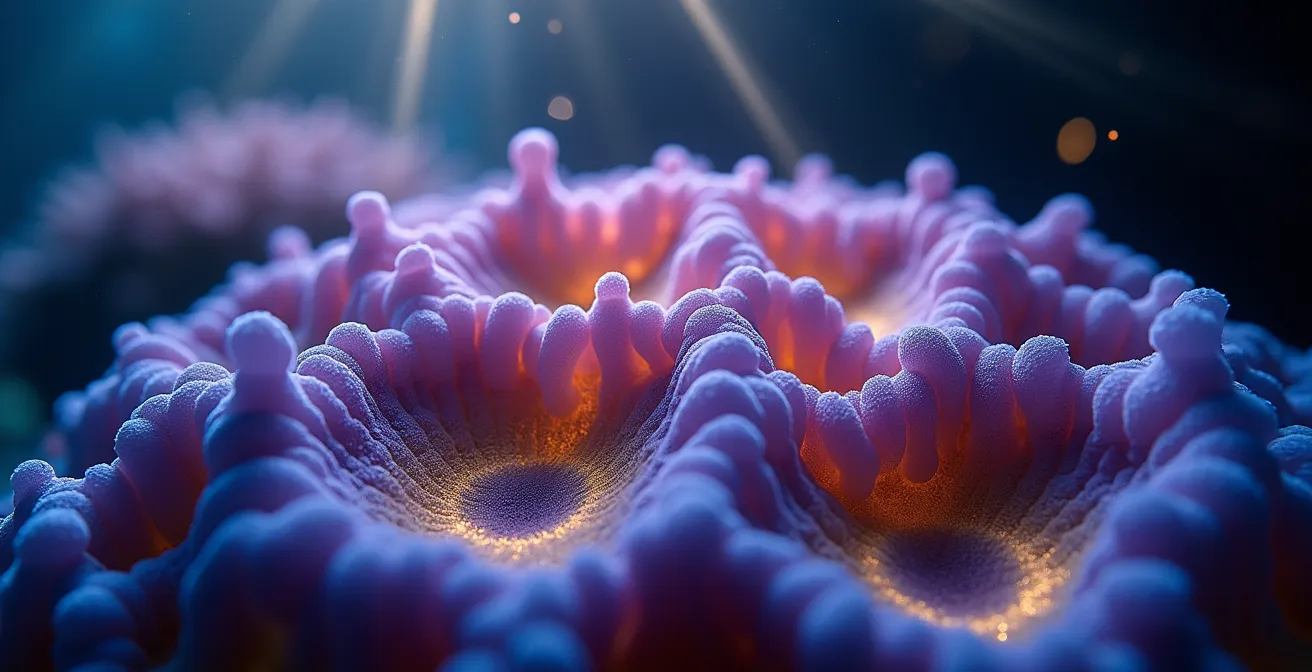
As this visualization suggests, every new piece of information, every practiced chord on a guitar, or every new word in a foreign language creates and strengthens these connections. The challenge is key. Passive activities like simple puzzles may use existing pathways, but complex, multi-faceted skills force the brain to build entirely new structures. This active construction is the very essence of building your cognitive reserve, creating a brain that is not only healthier but fundamentally more resilient to the challenges of aging.
Ultimately, engaging in lifelong learning is a proactive investment in your cognitive future. It transforms the brain from a passive organ that ages into an active, dynamic system that continually rebuilds and reinforces itself.
How to Swap Butter for Olive Oil in Daily Senior Cooking?
The cornerstone of the MIND diet is a strategic shift in the types of fats you consume. This goes far beyond a simple “good fat vs. bad fat” binary. The focus is on replacing saturated fats, primarily from butter and red meat, with monounsaturated fats found in olive oil. This single change has a profound impact on brain health. Saturated fats can promote inflammation, a key driver of neurodegenerative processes, while the polyphenols and antioxidants in extra virgin olive oil actively combat oxidative stress and support the integrity of blood vessels in the brain.
Making the switch is less about deprivation and more about smart substitution. Start by making olive oil your primary cooking fat. Use it for sautéing vegetables, roasting chicken, and even in baking by using a conversion chart (typically three-quarters of the amount of butter). A simple vinaigrette made with olive oil, lemon juice, and herbs can replace creamy, saturated-fat-heavy salad dressings. The goal isn’t to eliminate butter entirely, but to relegate it to a supporting role—the MIND diet suggests using less than one tablespoon per day.
The profound effect of this dietary pattern becomes clear when compared to other well-known healthy diets. Research from Rush University, which developed the diet, analyzed its impact on Alzheimer’s risk. The results are striking. As the table below shows, while high adherence to both the Mediterranean and MIND diets offered similar, significant protection, the MIND diet was uniquely effective for those with only moderate adherence. This suggests its principles are more robustly protective, even with imperfect application.
| Diet Type | High Adherence Risk Reduction | Moderate Adherence Risk Reduction |
|---|---|---|
| MIND Diet | 53% | 35% |
| Mediterranean Diet | 54% | Negligible |
| DASH Diet | 39% | Negligible |
This data, sourced from the pioneering research at Rush University, underscores a hopeful message: you don’t have to be perfect to reap substantial brain-protective benefits. Every step toward replacing saturated fats with olive oil is a meaningful contribution to your long-term cognitive health.
This fundamental swap acts as a gateway to other healthy choices, creating a positive feedback loop that makes the entire dietary pattern feel more natural and sustainable.
The Risk of Loneliness: How It Shrinks the Hippocampus
While diet and exercise are well-known pillars of brain health, the impact of our social lives is just as critical and far more direct than many realize. Chronic loneliness and social isolation act as a form of chronic stress on the brain, triggering inflammatory responses and elevating cortisol levels. This toxic environment has a direct, physical consequence: it can lead to a measurable shrinkage of the hippocampus, the same brain region vital for learning and memory that we seek to grow through exercise and new skills. Loneliness doesn’t just make us feel bad; it actively dismantles the brain’s memory center.
Conversely, meaningful social engagement is a powerful form of cognitive exercise. Engaging in conversation requires us to listen, process information, access memories, and formulate responses in real-time—a complex neurological workout. According to research highlighted by Harvard Health, individuals with active, rich social lives demonstrate a significantly slower rate of cognitive decline compared to their more isolated peers. This social stimulation helps maintain the very neural pathways that are vulnerable to dementia, reinforcing your cognitive reserve.
This isn’t just about being in a room with other people; it’s about the quality and novelty of the interactions. Dr. Andrew Budson, a leading neurologist, emphasizes this point in his work on neuroplasticity. He states:
Meeting new people and learning about them is a great way to enhance neuroplasticity, as is traveling to a new place.
– Dr. Budson, Harvard Health
This perspective reframes social activity from a pleasant pastime to a crucial brain-building activity. Joining a book club, volunteering, taking a class, or even striking up conversations with new acquaintances are all powerful tools. Each new person you meet and every new perspective you consider is an opportunity to forge fresh neural connections, directly counteracting the isolating forces that can accelerate cognitive decline.
Therefore, nurturing your social circle is not an indulgence; it is a non-negotiable component of maintaining a healthy, resilient, and fully functioning brain as you age.
How to Enhance Deep Sleep Cycles to Clear Beta-Amyloid Plaques?
Sleep is not a passive state of rest for the brain; it is an active and essential maintenance period. During the deepest stages of sleep (slow-wave sleep), the brain activates a remarkable self-cleaning mechanism called the glymphatic system. This process flushes out metabolic waste products that accumulate during waking hours, including the infamous beta-amyloid proteins. When these proteins are not cleared effectively, they can clump together to form the toxic plaques that are a hallmark of Alzheimer’s disease. Chronic poor sleep disrupts this vital cleaning cycle, allowing these damaging proteins to build up night after night.
The link between insufficient sleep and Alzheimer’s risk is alarming. According to research from the Mayo Clinic, individuals who consistently fail to get enough quality sleep may be as much as twice as likely to develop the disease. This underscores that enhancing sleep quality, particularly deep sleep, is a primary therapeutic target for dementia prevention. The goal is to create a routine and environment that promotes uninterrupted, restorative sleep cycles.

To enhance deep sleep, focus on sleep hygiene: maintain a consistent sleep-wake schedule, even on weekends; create a cool, dark, and quiet bedroom environment; and avoid stimulants like caffeine and alcohol in the hours before bed. Crucially, exposure to blue light from screens (phones, tablets, TVs) in the evening can suppress melatonin production and delay the onset of deep sleep. Powering down electronics at least an hour before bedtime is a simple but powerful step. Combining these habits with a MIND-style diet can be even more effective, as people who closely follow these diets have been shown to have almost 40% lower odds of having significant plaque buildup.
By optimizing your sleep, you are not just fighting fatigue; you are actively engaging your brain’s built-in defense system against the very pathology of Alzheimer’s disease.
Learning a Language vs Learning an Instrument: Which protects the Brain?
When it comes to building cognitive reserve, not all mental activities are created equal. While any stimulating hobby is beneficial, the greatest gains come from activities that are complex, challenging, and require the integration of multiple cognitive systems. Both learning a new language and learning a musical instrument excel in this regard, but they exercise the brain in slightly different, complementary ways. The question isn’t which one is better, but rather understanding how их unique demands contribute to a more robust neural scaffold.
Learning a language heavily taxes the brain’s executive functions. It requires attention, working memory (to hold grammar rules and vocabulary while forming a sentence), and mental flexibility to switch between languages. It strengthens the prefrontal cortex and has been shown to delay the onset of dementia symptoms by several years. Learning a musical instrument, on the other hand, is a supreme act of multisensory integration. It combines auditory processing (listening to pitch), motor skills (finger movements), visual processing (reading music), and emotional interpretation. This holistic engagement creates incredibly widespread and resilient neural networks.
The most protective activities often involve “dual-tasking”—performing two or more tasks at once. Playing an instrument while reading music is a classic example. This type of training has shown measurable benefits, with studies demonstrating that dual-task training improved attention and processing speed by 8–14% in individuals with existing cognitive challenges. The key is to choose an activity that consistently pushes you out of your comfort zone. Here are some brain-stimulating activities that build powerful neural connections:
- Learn a new skill: Pursue a new language, instrument, or complex craft like painting or advanced cooking.
- Increase difficulty: If you enjoy puzzles or games, move on to more complex versions or strategy-based games that require long-term planning.
- Avoid routine: Incorporate novelty into your life. Visit new places (even locally), attend concerts or museum exhibits, and engage in problem-solving exercises.
- Engage creatively: Creative hobbies force the brain to think in new ways, forming fresh neural connections that strengthen cognitive reserve.
Ultimately, the “best” activity is one you find engaging enough to stick with over the long term. Consistency and a commitment to progressive difficulty are the true drivers of neuroplasticity and lasting brain protection.
Why Sedentary Habits Accelerate Cognitive Decline Within 6 Months?
The human brain is an incredibly energy-hungry organ, consuming about 20% of the body’s oxygen and calories despite making up only 2% of its weight. This high metabolic demand requires robust blood flow to deliver essential nutrients and clear away waste. A sedentary lifestyle directly sabotages this critical supply line. When we are inactive, circulation slows, blood pressure can rise, and inflammation increases throughout the body, including the brain. This creates a state of low-grade, chronic deprivation that starves brain cells and accelerates the processes of cognitive decline.
The impact of inactivity is not a distant threat; it can manifest with alarming speed. Studies have shown that a shift to a sedentary lifestyle can lead to measurable thinning in brain regions crucial for memory, such as the medial temporal lobe, in as little as six months. This physical degradation is the direct opposite of the hippocampal growth we see with exercise. In essence, sitting for prolonged periods actively undoes the very brain-building work you may be pursuing through other activities. It’s not enough to have a healthy diet or do a daily crossword; you must also fight the powerful degenerative force of inactivity.
The good news is that the brain responds quickly to renewed physical activity. As neurologist Dr. Budson explains, “From the perspective of the body, we know that brain growth factors are released when we engage in aerobic exercise, so that is critically important.” To trigger this response, the U.S. Department of Health and Human Services recommends at least 150 minutes of moderate-intensity aerobic exercise per week. This isn’t about training for a marathon. Activities like brisk walking, swimming, cycling, or even vigorous gardening all count. The key is consistency. Research from MindCrowd suggests that significant cognitive benefits begin to appear after achieving 50 hours of cumulative exercise over 4-6 months, which aligns with the 2-3 hours per week recommendation.
Breaking up long periods of sitting with short walks and integrating regular aerobic exercise into your routine is one of the most powerful and immediate actions you can take to protect your brain’s structure and function.
Why Your Caloric Needs Drop But Nutrient Needs Rise After 60?
As we age, our bodies undergo a significant metabolic shift. Basal metabolic rate—the energy your body burns at rest—naturally decreases. This is often compounded by a reduction in muscle mass, a condition known as sarcopenia, and a generally less active lifestyle. The result is that most people over 60 require fewer daily calories to maintain their weight. However, it is a dangerous misconception to believe that this means we need less nutrition. In fact, the opposite is true: your brain’s and body’s need for specific, high-quality nutrients actually increases.
This creates a critical challenge: you have a smaller “caloric budget” to work with, but a higher “nutrient requirement.” Every calorie must count. This is where the concept of nutrient density becomes paramount. The aging body is less efficient at absorbing and utilizing certain vitamins and minerals, such as B12, calcium, and vitamin D, which are all vital for neurological function and overall health. Furthermore, the low-grade inflammation that characterizes aging (sometimes called “inflammaging”) increases the need for antioxidants and anti-inflammatory compounds to protect brain cells from damage. The MIND diet is, at its core, a masterclass in nutrient density.
The foods it emphasizes—leafy greens, berries, nuts, olive oil, and fish—are packed with the vitamins, minerals, polyphenols, and omega-3 fatty acids that directly combat inflammation and support brain structure. Conversely, the foods it limits—processed snacks, sweets, and red meat—are high in “empty” calories that provide energy without the crucial micronutrients, and can even promote inflammation. To effectively adopt this approach, you must become a strategic eater, ensuring that every meal is an opportunity to fuel your brain with the highest quality building blocks available.
Your MIND Diet Adherence Checklist
- Review Your Fats: Is olive oil your primary cooking fat? Are you limiting butter to less than one tablespoon daily?
- Assess Your Grains: Are you consuming at least three servings of whole grains (like oatmeal, quinoa, brown rice) each day?
- Count Your Greens: Are you eating green leafy vegetables (spinach, kale, salad) six or more times per week, and other vegetables at least once daily?
- Analyze Your Snacks: Are you choosing nuts as a snack at least five times a week instead of processed options?
- Check Your Fruits and Proteins: Do you include berries at least twice a week, fish at least once a week, and poultry twice a week?
Meeting your body’s evolving needs isn’t about eating less; it’s about choosing better. Prioritizing nutrient-dense foods is the key to nourishing your brain and body within a more limited caloric framework.
Key Takeaways
- The MIND Diet’s power comes from a holistic approach combining nutrition, exercise, sleep, learning, and social engagement.
- Building “cognitive reserve” through neuroplasticity is an active process of creating a resilient brain structure.
- Even moderate adherence to the MIND diet provides significant protection against Alzheimer’s, making it a sustainable, real-world strategy.
How to Select Brain Training Apps That Actually Transfer to Real Life?
The market for brain training apps and games is booming, all promising to sharpen your mind and stave off cognitive decline. While the idea of a fun, easy digital solution is appealing, the scientific evidence calls for a healthy dose of skepticism. The core issue is one of transferability. While you might become exceptionally good at the specific game you are playing, this improvement often fails to translate, or “transfer,” to other unrelated, real-world cognitive tasks. You may get a high score on a memory game, but it doesn’t necessarily mean you’ll be better at remembering your grocery list or the names of new acquaintances.
Case Study: The Limits of Brain Training Specificity
A comprehensive review of brain training studies by Alzheimer’s Society UK revealed a consistent pattern. While participants showed significant improvement in the specific tasks they practiced within the games, this skill boost was highly specific. As the researchers noted, “the improvement didn’t translate over to any tasks that weren’t involved in the training, even if they were similar to the trained tasks.” This finding highlights that becoming a master of a single game doesn’t equate to a general enhancement of cognitive function.
This doesn’t mean all mental stimulation is fruitless. As expert Michael Valenzuela notes, “Starting new challenging activities for your mind, such as brain training or complex leisure activities, is linked to better brain health.” The key is to choose applications and activities that mimic the complexity and variability of real life. Instead of apps that focus on repetitive, single-domain tasks, look for those that promote:
- Strategy and Planning: Games that require long-term thinking, adapting to new rules, and planning several steps ahead.
- Real-World Simulation: Apps that simulate practical skills like navigation, managing a budget, or learning a new language in a conversational context.
- Novelty and Adaptability: Programs that continuously introduce new challenges and force you to learn new rules, rather than simply getting faster at the same old task.
Ultimately, while a well-chosen app can be a fun supplement, it should never replace the proven, real-world activities that build robust cognitive reserve: learning a new skill, engaging in social interaction, and staying physically active.
Frequently Asked Questions on The MIND Diet and Brain Health
What are the 10 brain-healthy foods in the MIND diet?
The core food groups are green leafy vegetables (like spinach and kale, at least 6 servings/week), other vegetables (at least 1 serving/day), nuts (5 servings/week), berries (especially blueberries, 2+ servings/week), beans (3+ servings/week), whole grains (3+ servings/day), fish (1+ serving/week), poultry (2+ servings/week), olive oil as the primary fat, and a small amount of wine (one glass/day).
Can the MIND diet work alongside other lifestyle changes?
Absolutely, and it’s designed to. The best results are achieved when the diet works in concert with other brain-healthy habits. As experts from Hebrew SeniorLife note, “Diet is very important, but it works in concert with exercise, sleep, stress management, social interaction, and mental stimulation to yield the best results.” A holistic approach is always more powerful.
What makes the MIND diet different from Mediterranean or DASH diets?
The primary difference is its specificity. While the Mediterranean and DASH diets provide excellent general guidelines, the MIND diet “recommends specific amounts of known brain-healthy foods.” For example, instead of just saying “eat more fruit,” it specifically emphasizes berries due to their proven neuroprotective properties. This targeted approach is likely why it shows such strong results in dementia prevention.