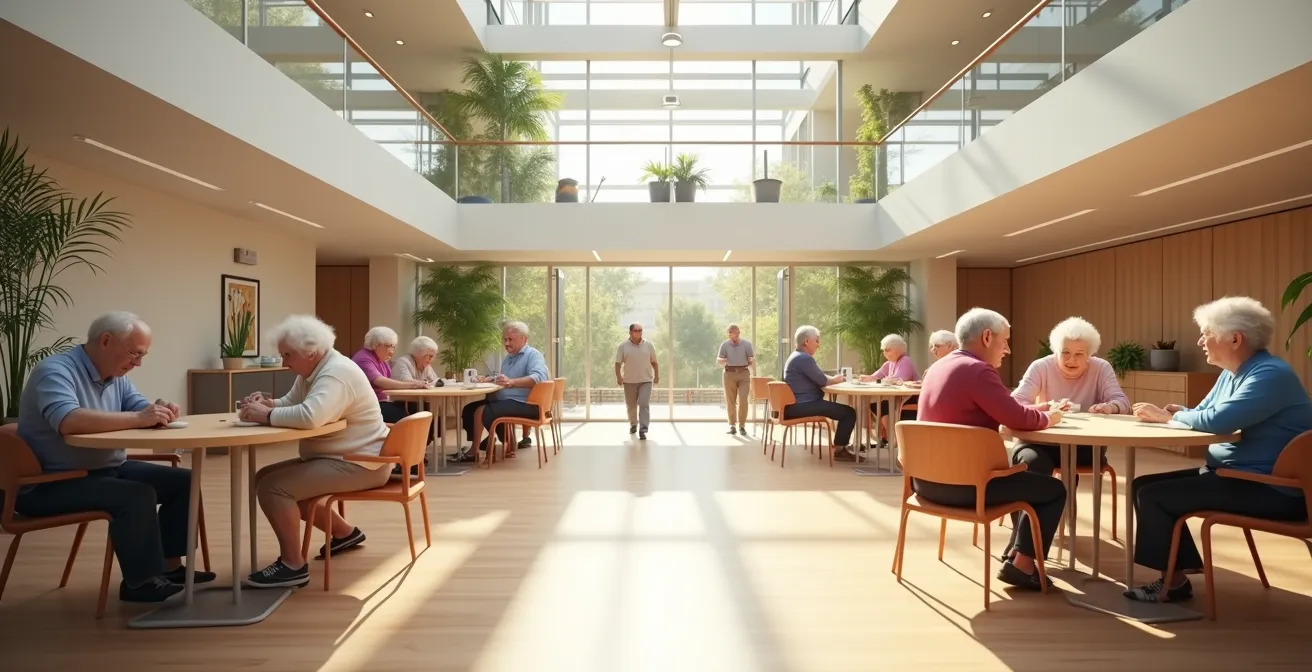
Contrary to the outdated ‘bingo hall’ image, today’s best senior centers are vibrant hubs for professional growth and personal legacy.
- They offer university-level learning and skill-based workshops, not just passive recreation.
- They function as platforms for high-impact volunteering and member-led entrepreneurial projects.
Recommendation: Shift your search from asking ‘what activities are offered?’ to ‘how can this center help build my purpose portfolio?’
Let’s be honest. You’ve seen the flyer tacked to a community bulletin board, printed in a large, friendly font: “Senior Bingo Night!” And if you’re like a growing number of active, engaged adults, your reaction was probably a quiet sigh. The stereotype of the senior center as a place for passive pastimes and lukewarm coffee is persistent, and for many, it’s a complete turn-off. It speaks to a model of aging that feels outdated—a waiting room for life’s end rather than a launchpad for its next vibrant chapter. You’re not looking to simply pass the time; you’re looking to invest it.
The common advice is to “check the schedule” or “look for fitness classes,” but this misses the fundamental shift that’s happening. The conversation is moving beyond basic socialization and wellness. The most innovative centers are becoming “Third Act Hubs,” dynamic environments focused on lifelong learning, skill-building, and legacy creation. The question is no longer just “What can I do there?” but “Who can I become there?” This requires a new framework for evaluation, one that treats your time and energy as a valuable asset in your personal “purpose portfolio.”
This guide is designed to dismantle the old clichés and give you a modern playbook for finding a center that matches your ambition. We’ll explore how to identify your ideal activity profile, weigh the real value of different funding models, and uncover the social strategies that build deep, meaningful connections. It’s time to stop looking for a place to go and start looking for a community that helps you grow.
To set the stage, the following video offers an inspiring look at how vital community and connection are for seniors navigating profound life changes. It’s a powerful reminder that a sense of belonging is a universal need, forming the foundation upon which all other purposeful activities are built.
To help you navigate this new landscape, this article is structured to guide you from initial self-assessment to taking concrete action. We will cover everything from identifying the right program style for your goals to the practical steps of starting your very own interest group.
Summary: Finding Your 21st-Century Senior Hub
- University Lectures or Crafting: Which Activity Type Suits You?
- Free Municipal Centers vs Private Clubs: Is Membership Worth It?
- How to Access Senior Centers Without a Personal Vehicle?
- The Rise of “Virtual Senior Centers”: Connecting from Home
- The Error of Waiting for Others to Approach You First
- How to Choose Volunteer Work That Matches Your Physical Ability?
- How to Start a Bridge Club to Combine Math and Socializing?
- How to Detect the Physical Symptoms of Chronic Isolation in Loved Ones?
University Lectures or Crafting: Which Activity Type Suits You?
The first step in finding the right center is to stop looking at the activity list and start looking at yourself. The question isn’t whether a center offers art or history; it’s what you want to achieve with that activity. Are you seeking intellectual stimulation to keep your mind sharp, social connection to build a new circle of friends, or a legacy-building project that gives back to the community? This is the core of building your “purpose portfolio.” A center that offers university-style lectures caters to cognitive engagement, while collaborative crafting sessions are built for social bonding. Some centers even foster a “Participant-to-Leader Pipeline,” where you can evolve from attending a workshop to leading one yourself.
Thinking in these terms transforms your search. You’re no longer a passive consumer of activities but an active investor in your own growth. This approach helps you filter out the noise. A long list of activities is meaningless if none of them align with your personal goals. Instead, look for depth and quality. A center with a single, well-structured lecture series led by a local professor offers more value for an intellectually-driven person than a center with a dozen disconnected, low-engagement pastimes. The goal is to find a place that offers sustained, meaningful engagement.
This commitment to engagement is reflected in attendance patterns. It’s not about just showing up; it’s about being consistently involved. In fact, research from the National Council on Aging reveals that 75% of participants visit their center 1-3 times weekly, demonstrating that these hubs become an integral part of their lives when the programming is right. This level of participation isn’t accidental; it’s the result of centers providing real value that aligns with members’ aspirations.
Ultimately, choosing an activity type is choosing a community. Whether you’re debating philosophy after a lecture or co-creating a quilt for charity, the activity is the vehicle for connection and purpose.
Free Municipal Centers vs Private Clubs: Is Membership Worth It?
The financial model of a senior center directly shapes its culture, community, and programming. The choice between a free municipal center and a fee-based private club isn’t just about cost; it’s about what kind of environment you’re seeking. Municipal centers, often funded by government sources like the Older Americans Act, pride themselves on accessibility, welcoming a diverse range of socioeconomic backgrounds. Private clubs, funded by member fees, tend to offer a more curated network and often feature higher-end amenities and professionally managed programming.
However, the lines are blurring. Public funding is often more powerful than it appears; for example, a government funding analysis shows that for every $1 in federal OAA funding leverages $3 in other support from state, local, and private sources. This allows many municipal centers to offer surprisingly robust programs. Furthermore, some are adopting innovative hybrid models. The Pennsylvania Senior Centers Modernization Initiative, for instance, used state grants to upgrade public facilities, enabling them to offer amenities on par with private clubs while remaining free and accessible. This shows a trend toward public centers that provide a high return on a taxpayer’s investment.
The key is to look beyond the price tag and evaluate the “investment model.” In a private club, your fee is directly reinvested into projects that members propose and value. In a municipal center, your participation demonstrates the center’s value to funders, ensuring its continued operation as a public service. The table below breaks down the core differences to help you decide which model best aligns with your expectations.
| Aspect | Free Municipal Centers | Private Clubs |
|---|---|---|
| Cost Structure | Free membership, optional activity fees | Annual fees ranging $200-$2000+ |
| Funding Model | Government grants, Older Americans Act funding | Member fees, donations, private sponsors |
| Community Type | Diverse socioeconomic backgrounds | Curated network of specific demographics |
| Autonomy Level | High member self-governance potential | Professional programming management |
| Investment Model | Tax-funded public service | Fees reinvested in member-proposed projects |
Ultimately, “worth it” is a personal calculation. A private club might be worth it for its curated network and premium services, while a modern municipal center can offer exceptional value and a stronger sense of diverse community engagement without the hefty fee.
How to Access Senior Centers Without a Personal Vehicle?
A vibrant senior center is useless if you can’t get there. For many active seniors, giving up a personal vehicle is a practical decision, but it should never mean giving up on community engagement. Modern senior centers recognize this and are increasingly becoming hubs of multi-modal transportation. The solution isn’t just one shuttle bus; it’s a web of interconnected options that ensure accessibility for everyone, regardless of their ability to drive.
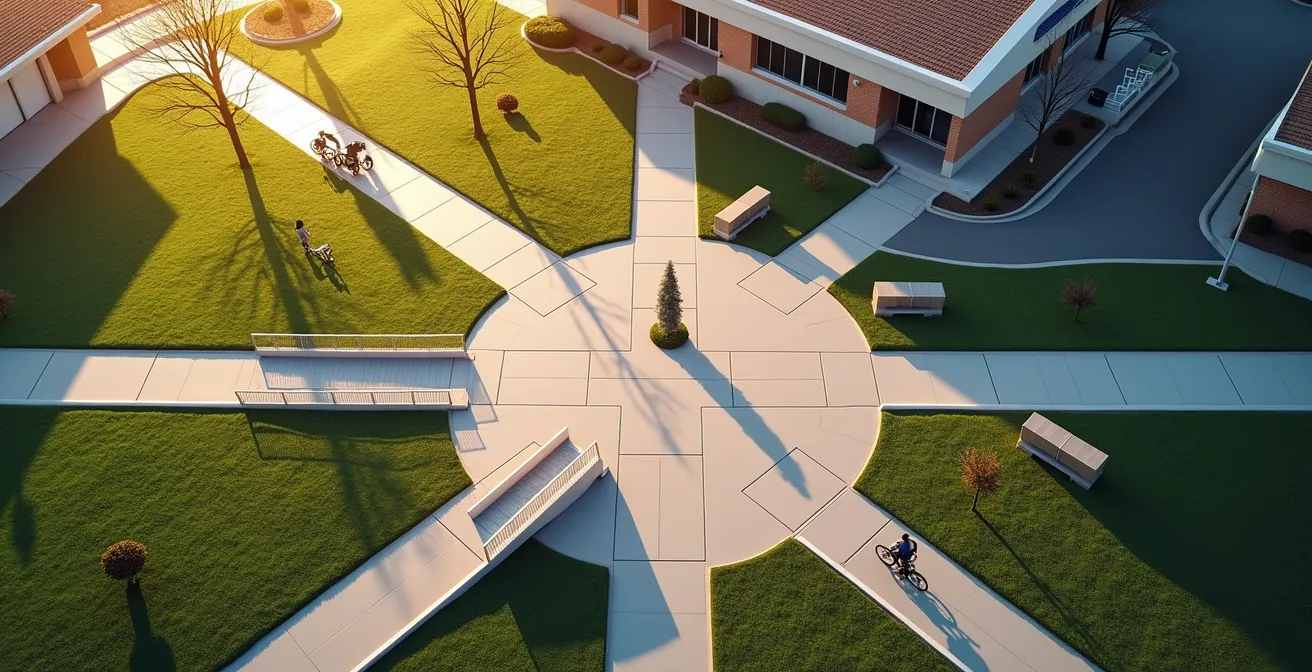
As the image above illustrates, the ideal center is a point of convergence for various transport methods. This includes not only traditional public transit but also innovative solutions. To assess a center’s true accessibility, you need to think like a city planner. Start with walkability: Are the sidewalks well-maintained? Are there benches for resting? Then, evaluate public transit, noting the proximity of bus or train lines and the availability of senior discounts. Beyond that, look for forward-thinking partnerships. Many centers now collaborate with ride-sharing services like Uber and Lyft or integrate with platforms like GoGoGrandparent to offer discounted, on-demand rides.
Don’t overlook community-driven solutions either. The most connected centers foster a culture of mutual support. This can take the form of a simple carpool board in the lobby, a list of vetted volunteer drivers, or partnerships with local churches that operate their own van services. Technology also plays a role, with some centers offering training on transportation apps or even providing subsidized accounts for ride services. A truly accessible center makes getting there part of its mission, not an afterthought.
By systematically evaluating these factors, you can calculate a center’s “Accessibility Score” and ensure that your chosen hub is one you can consistently and easily reach, securing your ability to stay connected and engaged.
The Rise of “Virtual Senior Centers”: Connecting from Home
The concept of a “center” is no longer confined to a physical building. The rise of virtual senior centers has created a powerful new way to combat isolation and deliver high-quality programming directly into people’s homes. This isn’t just about watching pre-recorded videos; it’s about live, interactive experiences that foster real connection. These digital hubs are a lifeline for those with mobility challenges, transportation barriers, or health concerns, but they also serve as a valuable supplement for all active seniors, offering flexibility and a wider range of options.
A prime example of this model’s success is the Salt Lake County Virtual Senior Center. They developed a comprehensive program that includes not just video conference classes but also telephone options for non-computer users and a library of self-guided activities. Their schedule is packed with everything from support groups and exercise classes to virtual tours of museums and crafting workshops. This demonstrates how a well-designed virtual program can replicate the core benefits of a physical center—structured programming, health and wellness support, and social connection—in a fully accessible format.
The key to their effectiveness is interactivity. These are not passive webinars. Virtual engagement research confirms that live-streamed classes with sensory and interactive features create a strong sense of safe socialization. Participants can ask questions in real-time, engage in discussions in breakout rooms, and see the familiar faces of their peers. This creates a genuine feeling of community that transcends physical distance. For many, the virtual center becomes a seamless extension of the physical one, allowing them to stay connected even on days when they can’t make the trip.
As you evaluate your options, consider centers that offer a hybrid approach. A strong virtual program is a sign of a forward-thinking organization dedicated to serving its entire community, wherever they may be.
The Error of Waiting for Others to Approach You First
Walking into a new social environment can be intimidating at any age. The biggest mistake you can make is to sit back and wait for connections to happen to you. Building a social circle requires a proactive strategy, and the best senior centers are environments designed to facilitate this. The goal isn’t just to be in a room with other people; it’s to engage in collaborative activities that naturally forge bonds. Passive activities create acquaintances; shared goals create friends.
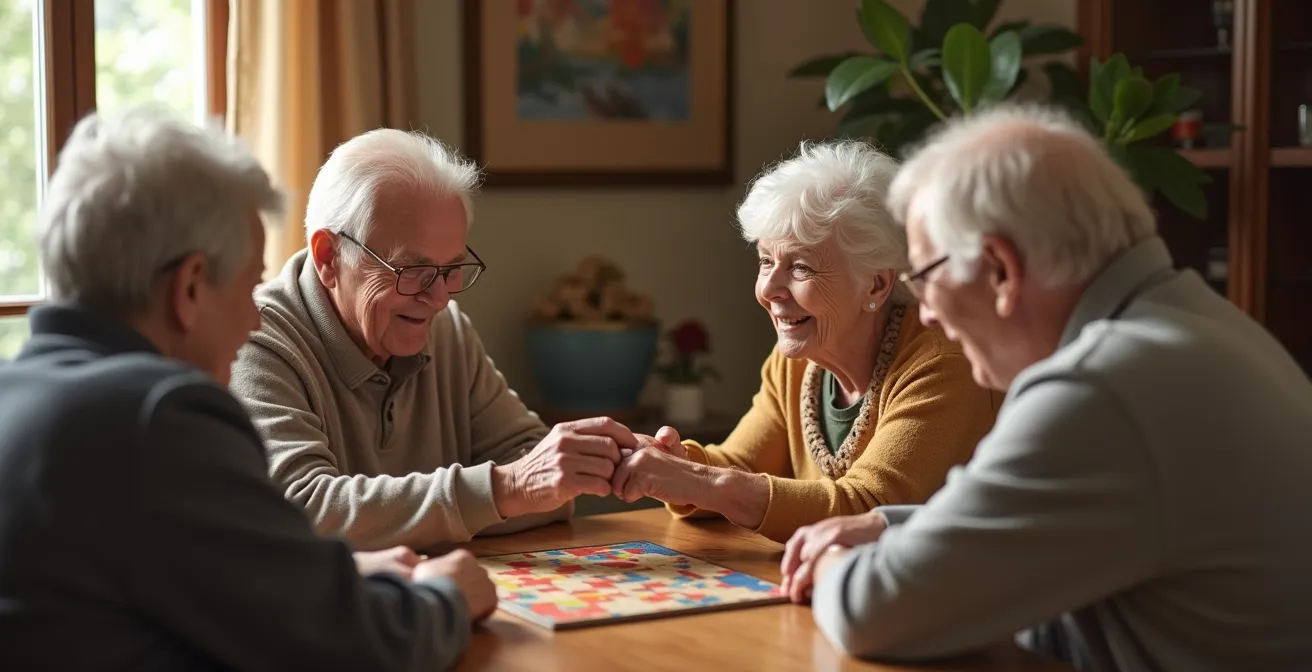
Instead of relying on small talk, you need a toolkit of social accelerators. One effective technique is the Role-Based Icebreaker: unofficially adopt a role like the “welcomer of newcomers” or the “tech helper for the confused.” This gives you a natural, purpose-driven reason to initiate conversations. Another strategy is the “Three-Encounter Rule”—aim for three brief, positive interactions with the same person on different days before trying for a longer conversation. This builds familiarity without pressure. Data on structured friendship initiatives shows the power of this approach, with some studies indicating that 88% of participants experience reduced isolation after joining such programs.
The most powerful strategy of all, however, is the “Facilitator’s Leap.” Instead of waiting to join a group, start one. Every center has a process for proposing new clubs or activities. By taking the initiative to start a book club, a hiking group, or a coding workshop, you instantly position yourself at the center of a new social nucleus. Recruiting three other members to co-found it—the “Founding Four” strategy—shares the workload and creates an immediate, tight-knit group. This shifts you from a passive participant to an active community builder, the fastest way to forge deep and lasting connections.
Friendship is a verb. By taking initiative, you don’t just find a community; you actively build the one you want to be a part of.
How to Choose Volunteer Work That Matches Your Physical Ability?
Volunteering is a cornerstone of a strong “purpose portfolio,” but the traditional image of physical labor can be a barrier. The great news is that the most impactful volunteer opportunities for today’s seniors often leverage a lifetime of professional expertise, not physical strength. This is the world of skills-based micro-volunteering, where you can contribute your knowledge as a writer, financial planner, marketer, or strategist from the comfort of your own home.
Platforms like Catchafire and the Taproot Foundation are revolutionizing what it means to volunteer. They connect skilled retirees with non-profits in need of their specific talents for remote, project-based work. The Catchafire model is particularly powerful: one volunteer, Pabitra, has provided nearly $2 million in value to non-profits through skills like grant writing and strategic consulting—all done remotely. This isn’t just busywork; it’s high-level contribution that makes a measurable difference. As an example of the scale of this movement, skills-based volunteering platforms have connected thousands of organizations with experts, delivering over $315 million in pro bono services since 2001.
This model is perfectly suited for seniors who want to stay engaged but may have limited mobility or energy. The opportunities are often “micro,” such as a one-hour consultation call or providing 15 minutes of written advice on a specific problem. This allows you to make a significant impact without a long-term, physically demanding commitment. When looking at a senior center, ask if they have partnerships with these platforms or if they facilitate their own skills-based volunteering programs. A center that helps you leverage your professional legacy is one that truly understands modern, purposeful aging.
Your career experience is one of your most valuable assets. Choosing volunteer work that uses your brain instead of your back is the smartest way to continue building your legacy.
How to Start a Bridge Club to Combine Math and Socializing?
The most vibrant senior centers are not just providers of programs; they are incubators for member-led initiatives. If you have a passion—whether it’s for the strategic rigors of Bridge, the artistry of watercolor, or the complexities of economic theory—the ultimate act of engagement is to start your own club. This not only guarantees you an activity you love but also instantly surrounds you with like-minded people. It’s the “Facilitator’s Leap” in action, and it’s easier than you think if you follow a clear template.

Don’t start with a formal proposal. Start with a conversation. The first step is to informally survey 10-15 people during other activities to gauge interest in your idea. Once you have a sense of a potential audience, find your “Founding Four”—three other committed individuals who will share the responsibility of getting the club off the ground. This core group provides the momentum and shared ownership necessary for long-term success. With your team in place, you can then draft a simple proposal for the center’s management, outlining your meeting needs and, most importantly, the benefits to the center community, such as increased member engagement.
Once approved, the key is to launch with structure. Establish a regular meeting time, create a simple rotation of responsibilities (like who brings snacks or who welcomes new members), and have a clear protocol for integrating newcomers. This structure ensures sustainability and prevents burnout. By following this replicable model, you’re not just starting a club; you’re building a durable micro-community within the larger center.
Your Action Plan: The Club-in-a-Box Launch Template
- Gauge Initial Interest: Survey 10-15 members informally about your club idea during existing activities.
- Find Your Founding Four: Recruit 3 committed co-founders to share responsibilities and build momentum.
- Draft Your Proposal: Include meeting frequency, space needs, equipment required, and member benefits in a one-page document.
- Present to Management: Emphasize community benefits like increased engagement and attracting new members with similar interests.
- Launch with Structure: Create regular meeting times, a rotation of responsibilities, and welcoming protocols for newcomers.
Remember, every thriving club at every center started with one person who decided to stop waiting and start building. That person can be you.
Key Takeaways
- Shift Your Mindset: Evaluate centers based on their ability to build your “purpose portfolio,” not just fill your schedule.
- Become a Creator, Not Just a Consumer: The most dynamic centers empower members to lead, teach, and create their own programs and clubs.
- Proactive Connection is Key: Lasting friendships are forged through shared goals and proactive social strategies, not by passively waiting.
How to Detect the Physical Symptoms of Chronic Isolation in Loved Ones?
While we’ve focused on finding a fulfilling center for yourself, this new understanding of what a center can be is also a powerful tool for helping others. Chronic isolation is a serious health issue, and its symptoms are often physical and observable long before a person admits they are lonely. Recognizing these signs in a friend or loved one is the first step toward guiding them toward the life-changing benefits of community engagement. A modern senior center is not just a social outlet; it is a frontline defense against the tangible decline caused by loneliness.
The signs of isolation can be subtle. They manifest as a slow decline in personal grooming, a loss of interest in hobbies that once brought joy (like a neglected garden), or an increase in vague memory complaints. You might notice unopened mail piling up or a general disorganization in their living space. These are not just signs of “getting older”; they are often direct physical symptoms of social and emotional withdrawal. When someone stops initiating contact and loses their spark, it’s a red flag that their world is shrinking.
This is where a senior center’s true value becomes clear. It offers targeted solutions for each of these symptoms. Apathy and loss of interest can be countered with purpose-driven volunteer work. Cognitive complaints can be addressed with stimulating lecture series or a strategic game like Bridge. Even physical deterioration can be slowed by structured fitness programs and the simple motivation of having a reason to get dressed and leave the house. The table below provides a clear matrix connecting the problem to the solution a center can provide.
| Isolation Symptom | Observable Signs | Targeted Center Activity Solution |
|---|---|---|
| Social Withdrawal | No longer initiating phone calls, neglected garden | Role-based activities, volunteer positions |
| Cognitive Decline | Memory complaints, confusion | University lecture series, cognitive challenge clubs |
| Physical Deterioration | Decline in grooming, mobility issues | Structured fitness programs, health monitoring services |
| Emotional Changes | Apathy, loss of interest | Purpose-driven activities, legacy volunteering |
| Environmental Neglect | Unopened mail, disorganized living space | Support groups, practical assistance programs |
By framing the suggestion to visit a senior center as a targeted solution to a tangible problem—not just a way to “get out more”—you can offer a path back to health, purpose, and connection.